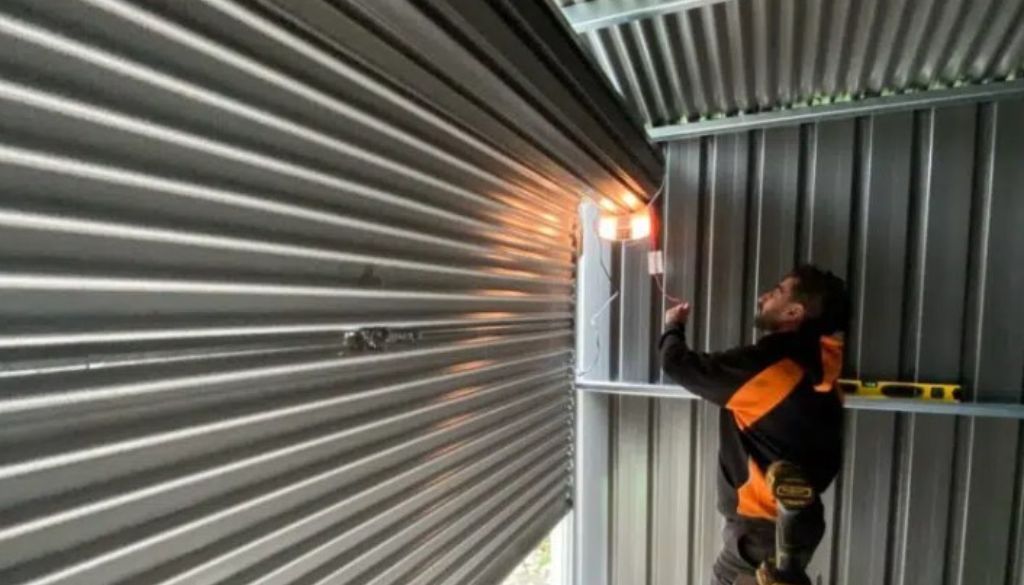
How to Tell If Your Garage Door Spring Is Broken Without Touching It
A broken spring is one of the most common reasons a garage door suddenly stops working, yet many homeowners misread the symptoms and blame the motor or the remote instead. Learning to recognise a spring failure from a safe distance saves you from forcing a door that should be left alone, and helps you describe the problem accurately when you arrange a repair. The good news is that a failed spring leaves several clear clues you can spot without laying a finger on the hardware. Below you'll find the signs that point to a broken spring, how to tell a spring fault apart from an opener fault, and why hands-off diagnosis is the safest approach.The Classic Signs of a Broken Spring
You heard a loud bang
When a torsion or extension spring lets go, the sudden release of stored energy produces a sharp, metallic bang that many people mistake for something falling or even a small impact on the house. If the door stopped working around the time you heard that sound, a spring is the prime suspect.
The door won't lift, or feels enormously heavy
With a working spring, a balanced door feels light. When the spring breaks, the counterbalance disappears and the full weight of the door, often well over 80 kilograms, lands on the opener or on your arms. The motor may strain, hum and give up, or lift the door only a few centimetres before stopping.
A visible gap in the torsion spring
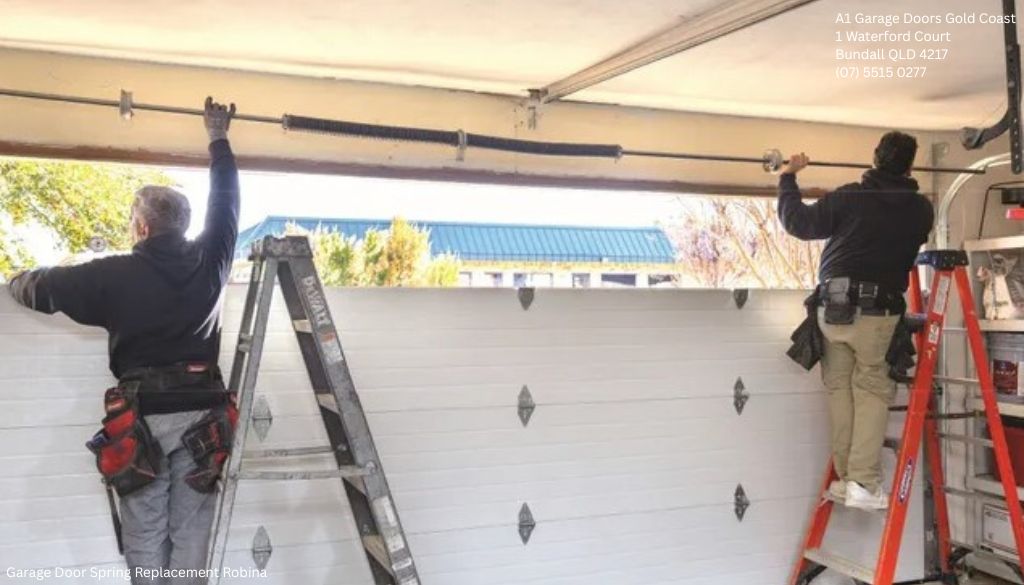
Look at the spring mounted on the shaft above the door. An intact torsion spring is a continuous tight coil. A broken one shows an obvious gap of a few centimetres where the steel has separated. This is the single clearest visual confirmation, and you can see it from the floor without touching anything.
The door opens crooked or jerks to one side
On a door with extension springs, a single failed spring lifts unevenly, so one side rises while the other lags, leaving the door visibly skewed in the tracks.
Telling a Spring Fault From an Opener Fault
It is easy to confuse the two because both leave you with a door that won't open. The key test is what happens when you pull the manual release cord and try to lift the door by hand, gently and only a little way. If the door is extremely heavy and resists, the springs are the issue. If the door lifts easily by hand but the motor refuses to move it, the fault is more likely in the opener, the drive or the power supply. Do this test only to the point of feeling the weight; never attempt to fully raise a heavy, unbalanced door.
Other clues point away from the springs. If the motor runs through its full cycle but nothing moves, a stripped drive gear or disconnected trolley may be to blame. If the remote does nothing at all, the problem could be batteries, power or the logic board rather than the springs.
Common Homeowner Mistakes
- Repeatedly pressing the opener button: Driving the motor against a dead spring strains the opener and can burn out the motor or strip the gears.
- Trying to muscle the door up: Lifting an unbalanced door by hand risks it crashing back down once you let go.
- Assuming it's the motor: Buying or booking an opener repair when the real fault is a snapped spring wastes time and money.
- Parking inside before checking: If the door has a broken spring, you may not be able to get the car back out without help.
Safety Considerations
The reason this guide commercial garage door services Gold Coast is about diagnosis without touching the hardware is simple: the springs and the cables they work garage door sources with store dangerous energy, and a door with a failed spring is unbalanced and unpredictable. Keep fingers away from the spring, the shaft and the cable drums. If a cable has also come loose, treat it as live until a technician confirms otherwise. There is no safe way to inspect a tensioned spring closely without the right tools and experience.
When to Call a Professional
A confirmed gap in the spring, a door that has become suddenly heavy, or a door that lifts crooked all call for professional replacement. Because springs share an age and cycle count, a technician will usually recommend replacing both at once on a two-spring door, and will check the cables and balance while the hardware is apart.
Frequently Asked Questions
Can I still open the door if the spring is broken?
Sometimes, by hand with the opener disengaged, but the door will be very heavy and prone to dropping. It is safer to leave it closed until repaired.
Will my opener be damaged if I keep trying?
It can be. Forcing the motor against the full unbalanced weight of the door can strip gears or overheat the motor, turning one repair into two.
Is a broken spring an emergency?
It is urgent if your car is trapped inside or the door is stuck partly open and your home is exposed, but it is not dangerous as long as the door is left closed and untouched.
How quickly can a broken spring be replaced?
For a technician with the right springs on hand, it is usually a straightforward same-visit repair once the correct size is confirmed.
About A1 Garage Doors Gold Coast
A1 Garage Doors Gold Coast services homes and businesses across the Gold Coast and surrounding suburbs for repairs, replacements and installations. Contact details are below.
A1 Garage Doors Gold Coast
1 Waterford Court, Bundall, QLD 4217 Phone: (07) 5515 0277 Website: https://goldcoastgaragedoorrepair.com.au You can identify a broken spring with your eyes and ears alone: the loud bang, the sudden weight, the gap in the coil and the crooked lift all point the same way. The most useful thing you can do is stop pressing the button, avoid wrestling the door, and keep clear of the tensioned hardware until help arrives. Accurate, hands-off diagnosis protects your opener, your door and your hands, and gets the right repair organised the first time.