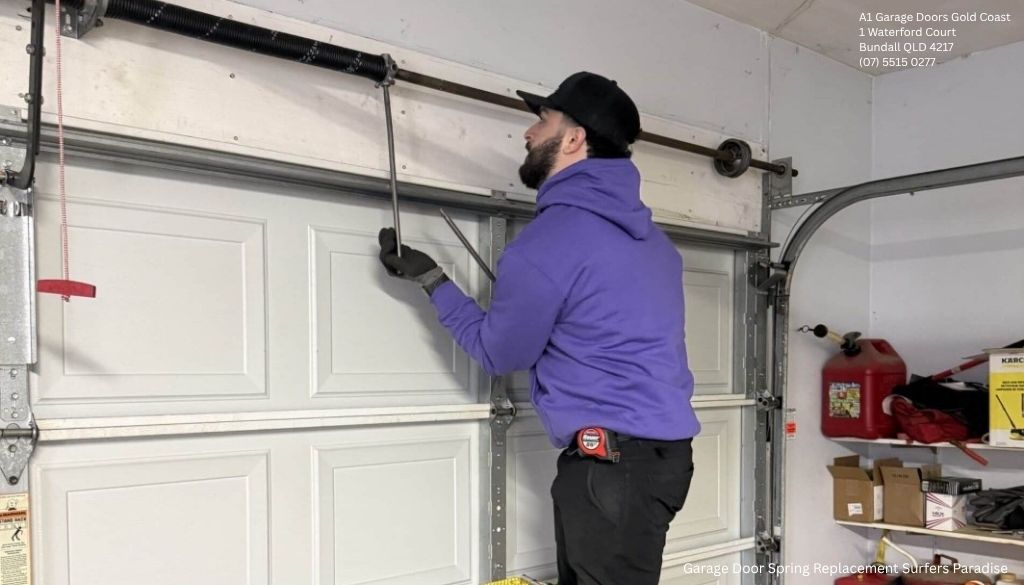
Garage Door Rollers Maintenance and Inspection Guide
Garage door rollers do not usually get much attention until the door starts dragging, rattling, or refusing to close cleanly. They sit inside the garage door tracks, moving every time the door opens or closes, and they have a quiet influence on how the entire system behaves. When rollers bind, wobble, or travel unevenly, the symptoms often show up somewhere else first: the garage door opener strains, the door hesitates, the tracks shake, or the safety system stops the door from completing a close cycle.
A good roller inspection is not just about making the door sound better. It is part of garage door safety. A residential automatic garage door is a large moving object operated by a motor, springs, cables, tracks, sensors, brackets, and hinges. Federal safety rules for automatic residential garage door openers require entrapment protection, such as a photoelectric electric eye sensor or an equivalent safety system. That requirement exists because a closing garage door can create a real hazard when the safety features do not work as intended.
Rollers are one small part of that larger safety picture. They do not replace the need to test the garage door opener’s reversal system, inspect the garage door sensors, or call a professional when the door fails a safety check. But neglected rollers can contribute to rough travel, vibration, and uneven movement, all of which make garage door troubleshooting harder and increase wear on related parts.
The safest mindset is simple: inspect what you can see, test only what the owner’s manual permits, keep hands and tools away from moving parts, and leave high-tension systems such as garage door springs, torsion springs, and garage door cables to trained professionals.
Why rollers matter more than they seem
Garage door rollers guide the sections of the door as they move along the garage door tracks. When the door is closed, they help hold the sections in alignment. When the door opens, they allow the panels to bend through the curved track and travel overhead. If the rollers are moving freely, the door can travel in a controlled path. If they are sticking, loose, worn, or misaligned, the door may chatter, shift, or bind.
That matters because the garage door opener is not supposed to overpower a bad door. The opener is there to move a properly balanced door, not to force a damaged or jammed system into motion. When a door becomes hard to move, the opener may struggle, stop, or reverse. Sometimes homeowners assume the opener is failing when the real issue is mechanical resistance somewhere in the door system. Rollers, tracks, hinges, springs, and cables all deserve attention before blaming the motor.
In the field, one of the more common homeowner observations is, “The opener works, but the door sounds terrible.” Noise by itself does not diagnose the problem, yet it is useful information. A grinding or scraping sound can point toward track contact. A rhythmic clunk may follow the spacing of the rollers. A sudden pop or sharp snap should be treated more seriously, especially if the door looks uneven or a cable appears loose. Good garage door maintenance starts with listening, then looking, then deciding whether the issue is safe to handle or belongs in the hands of a garage door repair technician.
Safety comes before inspection
Before inspecting rollers, remember that a garage door system stores and transfers force through several components. Springs help counterbalance the weight of the door. Cables help lift and lower it. Tracks guide it. The opener moves it when the door is in proper working order. Working at ceiling height and in cramped spaces also creates physical risks, especially when tools, ladders, awkward posture, and overhead hardware are involved.
Do not loosen bottom brackets, cable drums, torsion spring hardware, or spring-related fasteners during a roller inspection. Those parts can be under dangerous tension. Even a small adjustment made without the right training can turn a routine garage door maintenance task into an emergency garage door repair.
The safest starting point is a visual inspection with the door stationary. If you need to stand on a ladder to see upper rollers or track hardware, set the ladder carefully, keep your body balanced, and avoid leaning into the track. If something requires force, disassembly, or reaching around moving parts, stop. A careful homeowner can notice problems, but professional judgment is needed when the issue involves springs, cables, balance, or opener force settings.
A practical inspection routine
A garage door inspection should be calm and deliberate. Rushing through it often causes people to miss the obvious: a bent track edge, a roller stem sitting at an odd angle, a sensor blocked by storage items, or a door that sits crooked in the opening. Start with the door closed and the garage well lit. If the opener has been acting unpredictably, do not keep cycling the door over and over. Repeated operation can worsen a mechanical problem.
The goal is to observe, not to force the door into compliance. Watch the path of the rollers in the tracks. Look for points where the roller seems to rub, jump, or tilt. Pay attention to whether one side of the door appears to travel differently from the other. A door that looks uneven, hangs at an angle, or seems to shift during travel may have issues beyond rollers, including garage door cables or garage door balance problems.
Here is a concise inspection checklist that fits most residential doors:
That final point is not just a cautious add-on. Safety reversal systems should be tested monthly. If a garage door opener does not reverse when it should, the system should be adjusted according to the owner’s manual or inspected by a professional. A non-reversing garage door opener is a known hazard, and a rough-moving door can complicate the opener’s ability to operate safely.
What worn or troubled rollers can look and sound like
Roller problems rarely announce themselves with one neat symptom. They tend to overlap with track issues, hinge wear, opener strain, and door balance concerns. That is why a good inspection looks at patterns rather than one isolated clue.
A roller that has developed play may let the door section move slightly more than it should. The homeowner may hear a rattling sound as the door travels. A roller that does not spin freely may slide instead of roll, which can create rubbing marks on the track. A roller sitting at a visible angle may indicate trouble with the hinge, stem, bracket, or track alignment. If several rollers show unusual movement on one side, the door may be fighting the track rather than traveling naturally through it.
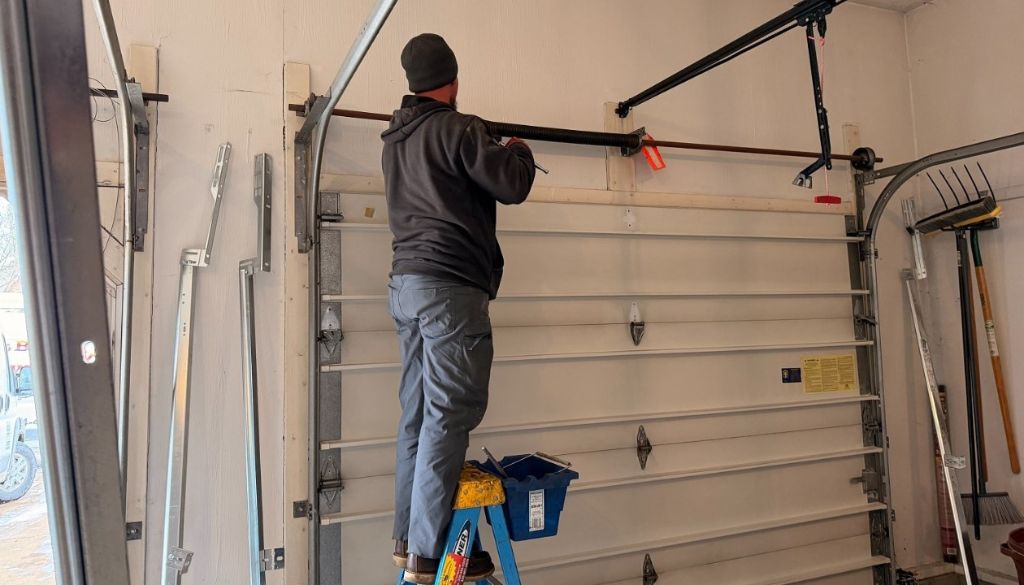
Track condition matters just as much. Garage door tracks are not decorative rails. They define the path the door must follow. If a track is bent, loose, obstructed, or out of alignment, replacing rollers alone may not solve the problem. I have seen service calls where a homeowner lubricated the rollers again and again, hoping the noise would go away, when the real issue was a section of track that had been bumped inward. The roller was doing exactly what physics forced it to do: scraping through a narrowed space.
The opener can also give clues. If the garage door opener starts, stops, reverses, or sounds strained, do not assume the motor is weak. Automatic openers are tied directly to safety expectations. A properly functioning opener should reverse when closing onto an obstruction. When a door is stiff or uneven, opener behavior deserves careful attention, not repeated adjustment by guesswork. Garage door troubleshooting should begin with visible mechanical conditions and the owner’s manual, then move to professional service if the answer is not clear.
Lubrication, and why more is not always better
Garage door lubrication is one of the simplest maintenance tasks, but it is also one of the easiest to overdo. The purpose is to reduce friction at appropriate moving points, not to coat the entire track in a sticky film. A track packed with residue can collect dust and grit, which may interfere with smooth travel rather than improve it.
The exact lubrication guidance can vary by door and roller type, so the owner’s manual should be the first reference. If the manufacturer gives specific instructions, follow those rather than internet habits. Some parts benefit from lubrication, while others may not. Applying lubricant to the wrong place can mask symptoms without addressing the cause.
A common mistake is using lubrication as a repair. If a roller is damaged, loose, or misaligned, lubricant will not restore the geometry of the door. If the track is bent, lubricant will not straighten it. If garage door springs are no longer helping the door balance properly, lubricant will not make the opener’s job safe. Lubrication belongs inside a maintenance routine, not in place of a proper garage door inspection.
The sound of a door after lubrication can be helpful, though. If a minor squeak quiets down and the door continues to travel evenly, the issue may have been ordinary friction. If grinding, banging, binding, or shaking remains, the next step should be inspection, not more spray. Persistent noise is information. Treat it that way.
Rollers, balance, springs, and cables work as a system
It is tempting to isolate garage door rollers as if they work independently, but a sectional overhead door is a connected system. Rollers move inside the tracks. Hinges connect the sections. Garage door cables help lift the door. Garage door springs, including torsion springs on many systems, counterbalance the door’s weight. The opener moves the door when the mechanical system allows it to move properly.
Garage door balance is especially important. A balanced door is easier and safer for the opener to move. An unbalanced door may feel heavy, drift, slam, or refuse to stay where expected. Testing balance and adjusting spring tension are not casual tasks. Spring systems can be dangerous, and torsion springs should not be adjusted by someone without proper training.
The same caution applies to cables. A loose, frayed, displaced, or damaged cable is not a roller problem, even if the door’s rough movement first drew attention to the rollers. Cable-related problems can affect how the door sits in the tracks and how the rollers travel. If a cable appears wrong, the safest decision is to stop using the door and arrange professional garage door repair.
This is where experience matters. A homeowner may describe the issue as “bad rollers” because that is what they can see. A technician may find that the rollers are worn, but also that the door is out of balance or the track is distorted. Replacing only the most obvious part can leave the root cause in place. Good repair work follows the symptom back through the system.
The opener and sensor checks that belong with roller maintenance
Any time the door’s movement changes, the garage door opener and garage door sensors deserve attention. Residential automatic garage door openers are required to include entrapment protection such as photoelectric sensors or an equivalent safety system. Those safety features are not optional accessories. They are central to safe operation.
Photoelectric sensors are usually positioned near the lower part of the door opening. When something interrupts the beam while the door is closing, the opener should respond according to its safety design. If the sensors are blocked, misaligned, damaged, or disconnected, the door may refuse to close properly, or the system may behave unpredictably. Storage bins, bicycles, garden tools, and even small shifts in sensor brackets can create problems that look like opener failure.
The reversal function matters just as much. Safety guidance calls for monthly testing of the reversal system. If the door fails to reverse, follow the owner’s manual for adjustment or contact a professional. Do not keep using a door that fails a reversal test simply because it still opens. A garage door that closes but does not reverse properly presents a real hazard.
Children should also be taught garage door safety, and remote controls should be kept out of their reach. That advice may sound unrelated to rollers, but it belongs in the same maintenance conversation. A smooth-running door can still be unsafe if children treat it like a toy or if an adult ignores a failed safety test. Mechanical maintenance and safe use go together.
When roller problems point toward repair or replacement
Not every noisy door needs garage door replacement. Many issues can be corrected with maintenance, adjustment, or replacement of worn components. At the same time, there are situations where the roller complaint is only one sign of a replace garage door larger problem.
A door that has been hit by a vehicle, twisted out of shape, or operated repeatedly while binding may have damage beyond the rollers. Tracks may be bent. Hinges may be stressed. Sections may no longer align cleanly. The opener may have been working harder than it should. In those cases, replacing rollers alone may improve one symptom while leaving the system unreliable.
Garage door installation quality also affects roller performance over the long term. A door installed with poor track alignment, incorrect hardware positioning, or careless opener setup can develop movement problems earlier than expected. Repairing such a door requires more than swapping parts. The system needs to be evaluated as a whole, including tracks, opener, sensors, springs, cables, and balance.
A professional inspection is warranted when the door will not move smoothly by normal operation, when the opener reverses for no clear reason, when the safety system fails testing, when cables or springs look questionable, or when the door appears crooked. These are not good areas for trial and error. The risks include property damage, personal injury, and worsening the original problem.
A maintenance rhythm that works
Garage door maintenance works best when it becomes routine rather than reactive. Waiting until the door screams, shakes, or stops halfway usually means the system has already been under stress for a while. A short monthly safety check, paired with occasional visual inspection, catches many issues while they are still small.
The monthly reversal test belongs at the center of that routine. If the garage door opener does not reverse properly, the issue should be addressed according to the owner’s manual or by a professional. The photoelectric sensors should be kept clear and confirmed to be working. The door’s travel should look steady, without binding or obvious side-to-side shifting.
A seasonal inspection can go a little deeper. Look at the rollers and tracks with good lighting. Notice whether new scraping marks have appeared. Listen for changes in sound. Check whether stored items have crept into the sensor area or near the tracks. Homeowners often use garages as overflow storage, and the door system can gradually get crowded by boxes, tools, sports gear, and ladders. Clear space around the tracks and sensors helps prevent avoidable trouble.
Here is a simple maintenance rhythm that keeps the focus where it belongs:
That rhythm does not require a homeowner to become a technician. It simply creates a habit of noticing. Most serious garage door problems give some warning, such as rough travel, uneven movement, or failed safety response. The earlier those signs are taken seriously, the better.
What homeowners can safely do, and what they should not do
The line between maintenance and repair matters. Homeowners can usually keep the sensor area clear, visually inspect rollers and tracks, listen for changes, follow the owner’s manual, and perform the recommended safety tests. They can also keep remote controls away from children and explain that the garage door is not something to run under, hang from, or play with.
The risky work begins when parts must be loosened, tension must be changed, or the door must be supported during component replacement. Roller replacement may look simple in a short video, but the details depend on the door design and roller location. Bottom rollers are especially concerning because bottom fixtures are often associated with cable tension. Upper rollers can involve ladder work, awkward positions, and overhead hazards. A person working alone may not have stable access or the ability to control the door if something shifts.
Professional garage door repair technicians bring more than tools. They know how to stage the work, secure the door, recognize spring and cable risks, and evaluate whether the opener, tracks, and sensors are operating safely after the repair. That matters because fixing one mechanical part without confirming the safety system can leave a dangerous condition unresolved.
OSHA guidance for installation and repair work recognizes hazards from working at ceiling height, cramped spaces, hand tools, and awkward postures. Those are not theoretical concerns. A garage is often crowded, poorly lit, and full of trip hazards. Even a small repair can become difficult when the ladder is wedged between a car, a storage rack, and a half-open door.
Reading the door before calling for service
When you do call for service, the information you provide can help the technician prepare. Describe what the door does, not just what you think is broken. “The left side jerks near the top of travel” is more useful than “I need rollers.” “The opener reverses halfway down unless I hold the wall button” gives important context about the opener and sensor behavior. “The door is crooked and I see a loose cable” signals a more urgent mechanical issue.
Avoid operating the door repeatedly to demonstrate the problem if it appears unsafe. If the door is stuck, crooked, or binding, leave it alone. If the opener has failed a safety test, do not rely on it until the issue is corrected. If children are in the home, make sure remotes are out of reach and the wall control is not treated as a toy.
A good service visit should include more than replacing a noisy part. The technician should look at the door’s travel, the garage door tracks, the rollers, the cables, the springs, the opener, and the safety features. If parts are replaced, the door should be checked afterward for smooth movement and safe opener behavior. The repair is not finished just because the noise is quieter.
The role of replacement decisions
Garage door replacement enters the conversation when the existing system is damaged, unreliable, poorly fitted, or no longer practical to repair. Rollers alone rarely justify replacing an entire door, but roller problems can reveal age, impact damage, track issues, or installation defects that make broader work reasonable.
Replacement can also be considered when repeated repairs no longer restore dependable operation. A door that constantly binds, shakes, or knocks rollers out of alignment may have structural or installation problems. In that case, spending money on isolated repairs can become frustrating. A professional should explain whether the issue is limited to serviceable components or whether the door system itself is the problem.
Garage door installation should include attention to safe opener setup, proper track alignment, sensor function, and smooth travel. The opener must not be treated as the final answer to a poorly moving door. A new opener installed on a bad door can still struggle. A new door installed without proper safety checks can still create hazards. Installation and safety testing belong together.
Small habits that prevent large problems
The best garage door maintenance habits are not complicated. Keep the tracks and sensor area free of stored items. Listen when the door sounds different. Watch whether the rollers move smoothly through the tracks. Test the safety reversal system monthly. Follow the owner’s manual. Do not adjust springs or cable hardware unless you are trained to do so. Call a professional before a small mechanical issue becomes a stuck door, a damaged opener, or a safety failure.
Garage door rollers deserve attention because they are visible, active, and easy to overlook. They tell a story about the rest of the system. Smooth, steady roller travel usually means the tracks, hinges, balance, and opener are working in harmony. Rough roller movement often means something needs inspection.
A garage door is convenient precisely because it becomes routine. Press the remote, drive in, press it again, and walk away. That routine should not make the system invisible. A few minutes of careful inspection can reveal the early signs of wear, obstruction, or unsafe operation. When the door moves cleanly, the sensors respond properly, and the opener reverses as it should, the entire system earns the trust homeowners place in it every day.