Garage Door Repair Guide: Troubleshooting Squeaks, Grinding, Rattling, and Binding
A garage door rarely becomes noisy all at once. More often, it starts with a faint squeak near one hinge, a light rattle when the door reaches the curved section of track, or a rough grinding sound that only appears in cold weather. Homeowners often ignore those early sounds because the door still opens and closes. That is understandable, but it is also how small maintenance issues turn into garage door repair calls.
A sectional garage door is a system of moving parts. Panels, hinges, rollers, tracks, cables, springs, and the garage door opener all work together. When one part gets dirty, dry, loose, misaligned, or worn, the symptom may show up somewhere else. A squeak at the side of the door may come from a hinge. A rattle may come from hardware that has loosened through normal use. A binding door may point to track trouble, roller problems, spring imbalance, or a door that is no longer moving evenly.
The goal is not to make every homeowner a garage door technician. Some parts, especially garage door springs, torsion springs, and cables, store or control significant force and should be treated with caution. The goal is to help you listen intelligently, inspect safely, perform reasonable garage door maintenance, and know when to stop and call a qualified repair professional.
Start with the sound, but do not stop there
Noise is a clue, not a diagnosis. Two doors can make the same squeak for different reasons. A lightweight door with dry hinges may squeal loudly and still move safely. A heavier high-use door may make a similar sound because its rollers are wearing or its spring system is no longer helping carry the door properly.
The first useful question is when the sound happens. A squeak that appears through the full travel of the door often points to dry hinges, rollers, or spring coils. Grinding during the first few inches of movement may involve the garage door opener, the door balance, or a roller dragging in the track. Rattling at the end of travel can come from loose hardware, track vibration, or opener movement. Binding usually feels more serious because the door hesitates, jerks, or stops as if something is physically resisting it.
Pay attention to whether the noise happens when the door is opening, closing, or both. A door that is quiet when opening but noisy when closing may be reacting to the changing load on the rollers and tracks. A door that binds only near the floor may have a track issue, a damaged lower section, or hardware that has shifted. A door that binds near the top may be struggling through the curved track section.
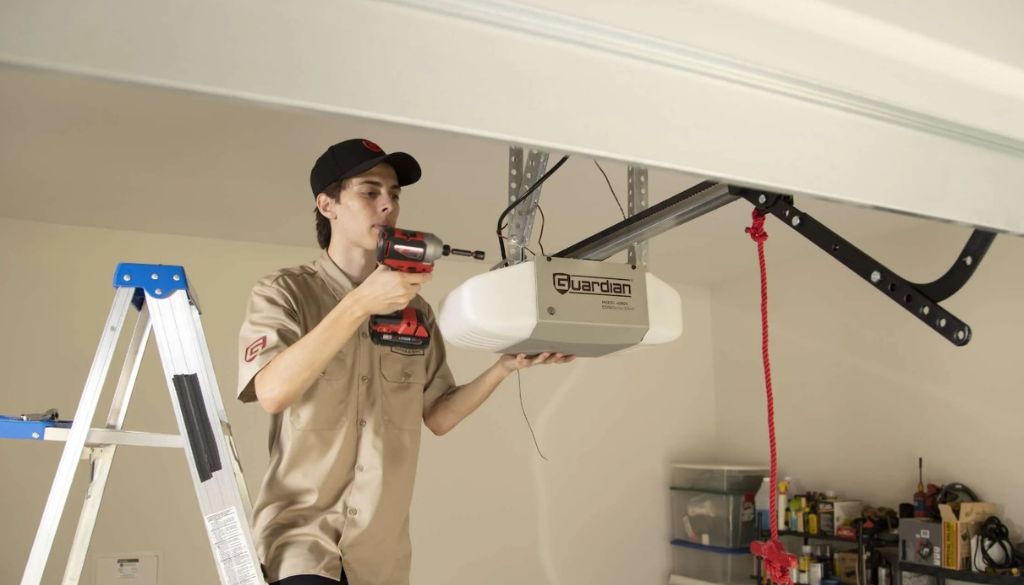
If the opener strains, pauses, or reverses, treat the situation as more than a noise problem. Automatic garage door openers are designed to work with a door that moves correctly. The opener is not meant to overcome a stuck, heavy, or poorly balanced door.
Safety first: what not to touch
Before inspecting anything, close the door if it can close safely. A closed door is usually more stable than an open one. Keep children and pets away from the work area, and do not place fingers between door sections or inside the tracks.
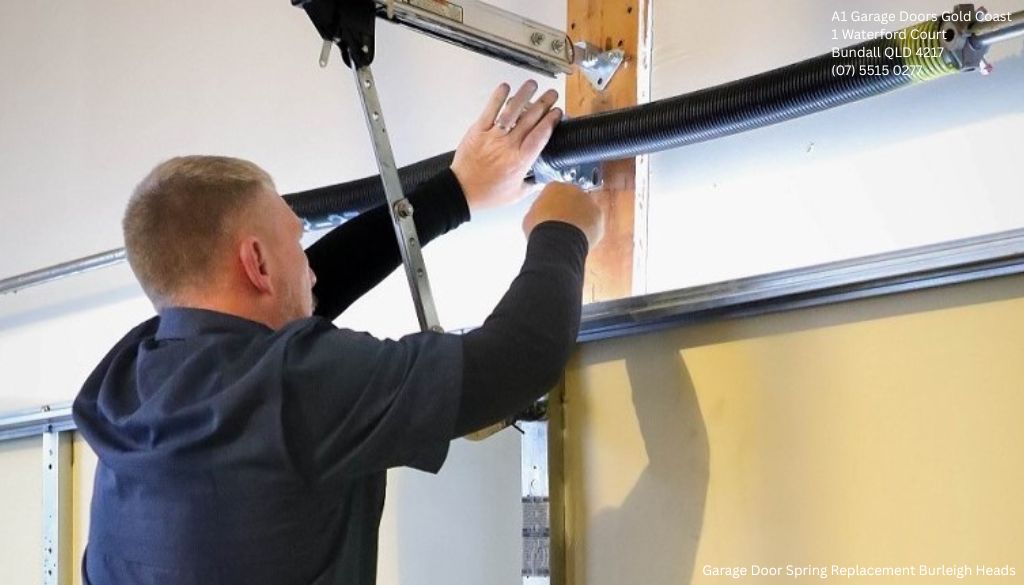
Garage door springs deserve special respect. Spring systems store and release energy to balance the door’s weight. Torsion springs are mounted above the door and unwind as the door opens. They are commonly used on heavier or high-use doors because they can provide controlled lifting assistance across the door’s travel. Extension spring systems and torsion spring systems differ in design, but both can be hazardous if handled incorrectly.
Cables also require caution. Garage door cables help manage the lifting force and door movement. A frayed, slack, or displaced cable is not a cosmetic issue. Do not pull it, loosen hardware near it, or try to rewind it yourself.
A safe homeowner inspection focuses on observation, cleaning, lubrication, and basic checks. Adjusting springs, replacing cables, forcing bent tracks back into position, or disassembling loaded hardware belongs in professional garage door repair.
A quick sound map for common garage door problems
Use this as a starting point, not a final verdict. If more than one symptom appears, assume the system needs a broader garage garage door repair door inspection.
| Symptom | Common areas to inspect | What it often means | |---|---|---| | Squeaking | Hinges, rollers, springs | Dry moving parts, dirt, early wear | | Grinding | Rollers, tracks, opener rail, opener drive | Dragging movement, dirty parts, mechanical strain | | Rattling | Hinges, track brackets, opener mounts, panels | Loose hardware or vibration | | Binding | Tracks, rollers, hinges, door balance | Misalignment, obstruction, worn parts, uneven movement | | Reversing or stopping | Sensors, door travel path, opener, door balance | Safety system activation or excessive resistance |
Squeaks: usually simple, but still worth tracing
A squeaky garage door often points to friction. Hinges pivot every time the sections bend through the curved track. Rollers turn and guide the door. Springs move as the door opens and closes. When these parts become dry or coated with grime, the door may announce every movement.
Many homeowners reach for the nearest can on the shelf, often a general-purpose product, and spray everything that moves. That is not ideal. A silicone-based garage door lubricant is commonly recommended for hinges, rollers, and springs. Avoid using WD-40 or other oil-based products as your main garage door lubrication, because they can attract dirt and leave parts dirtier over time.
Hinges are a common source of squeaks because they move under load. You do not need to soak them. A light application at the pivot points is usually enough. Rollers also deserve attention, but the correct approach depends on the roller design. Some rollers have exposed bearings, while others are sealed. Lubricating the stem and bearing area may help, but spraying lubricant all over the track is a mistake. The track is a guide, not a sliding surface that should be oily. Excess lubricant in the garage door tracks can collect grit, and grit can turn a minor squeak into rough movement.
Springs can also squeak as the coils move. A light coat of appropriate lubricant can reduce noise and help protect the surface. Do not loosen spring hardware, adjust winding cones, or attempt to change spring tension. If lubrication does not improve spring noise, or if the spring appears separated, distorted, or damaged, stop and call a professional.
A useful test after lubrication is to run the door through a few full cycles while standing clear. Listen for improvement. If the squeak changes location, you may have solved one dry point and revealed another. If nothing changes, friction may not be the only issue.
Grinding: the sound of resistance
Grinding has a harsher character than squeaking. It often means a part is dragging, rolling poorly, or working against resistance. It can come from the door itself or from the garage door opener.
Start with the simplest check: look at the tracks. Dirt, hardened debris, small stones, or built-up residue can interfere with roller travel. The tracks should be clean enough for the rollers to move freely. Wipe them with a clean cloth. Do not coat them with heavy lubricant. A clean track helps you see more important problems, such as dents, bends, or areas where the roller appears too tight against the metal.
Next, watch the garage door rollers as the door moves. Stand inside the garage, away from the tracks and door path. A healthy roller should travel smoothly without skidding, wobbling dramatically, or hanging up. A worn roller may chatter through the track, creating a grinding or scraping sound. If several rollers look rough, garage door replacement is not necessarily the answer, but roller replacement or a broader service visit may be appropriate.
The opener can also produce grinding. Chain, belt, and screw-style openers have different operating sounds, and some are naturally louder than others. The important issue is change. If an opener that used to hum smoothly now grinds, strains, or shakes, do not assume the opener is the root problem. Many openers become noisy because the door has become harder to move. The opener is then forced to do work that the spring system and rollers should be handling.
This is where garage door balance matters. A properly balanced door is assisted by its spring system. When balance is poor, the opener may pull harder, the rollers may press unevenly into the tracks, and the door may grind or bind. Balance testing must be approached carefully. If you are not comfortable disconnecting the opener and manually moving the door, do not do it. If you do, keep the door closed before using the emergency release, then lift the door slowly by hand. A door that feels extremely heavy, shoots upward, drops quickly, or will not stay in a partially open position needs professional attention. Do not adjust the springs yourself.
Rattling: vibration, looseness, and normal wear
Rattling is often less alarming than grinding, but it should not be dismissed. A garage door moves repeatedly, and vibration can loosen hardware over time. Hinges, brackets, opener fasteners, and track supports may all contribute to the sound.
The challenge is that a garage door can amplify a small vibration. A loose hinge screw may rattle through a whole panel. A track bracket with slight movement may sound like the door is shaking apart. The opener rail can vibrate when the door reaches a rough spot, even if the opener itself is not the problem.
A careful visual inspection helps. Look for hardware that has shifted, hinge leaves that no longer sit flat, roller stems that move excessively, or track brackets that appear loose. Tightening visible fasteners can be reasonable for a homeowner if the fasteners are not part of the spring or cable system and the door is stable. Use the correct tool and snug the hardware. Do not overtighten into thin metal or wood framing, because stripped holes create a new problem.
Panels can rattle too. Sectional garage doors rely on hinges to connect panels while allowing them to turn through the track radius. If a panel is damaged, loose at a hinge point, or flexing more than it should, the sound may show up as vibration. Panel damage can also change how the door sits in the tracks. A small dent is sometimes only cosmetic, but damage near hinges or rollers deserves more attention.
Rattling may also come from accessories attached to the door. Decorative hardware, handle sets, and weather seals can vibrate. Weather stripping along the bottom or sides can harden or shift, causing chatter as the door moves. These issues are less urgent than a cable or spring problem, but they can still affect noise and sealing.
Binding: when the door fights its own path
Binding is one of the clearest signs that the garage door needs attention. A binding door does not simply make noise. It resists movement. You may see the door hesitate, twist, jerk, or stop. If the opener reverses during closing, the door may be encountering resistance or the safety system may be detecting a problem.
Garage door tracks guide the movement of the door. They are not meant to carry the full weight of the door, but they must be aligned well enough for the rollers to travel without pinching. If a track is bent inward, the roller can rub hard against the side. If the track has shifted, the door may move unevenly. Dirt inside the track can also cause minor binding, especially if mixed with inappropriate lubricant.
Rollers are another common cause. A roller that no longer turns freely may slide instead of roll. That creates drag, noise, and wear. If the roller stem is bent or the roller is cracked, the door may bind at the same spot every cycle. A single bad roller can make a door feel worse than expected because the system depends on smooth movement across multiple points.
Hinges can create binding when they are bent, cracked, or poorly fastened. Each hinge has to support movement between sections. If one hinge is stiff or misaligned, the sections may not fold correctly through the curved track. This can produce a hard pop, scrape, or momentary jam.
Door balance also matters. If the spring system is not properly counterbalancing the door, the door may lean into the tracks or become too heavy for smooth travel. Torsion springs and other spring systems are not just lifting aids. They influence how evenly the door moves. When a door is out of balance, symptoms often appear as opener strain, rough movement, uneven gaps, or binding.
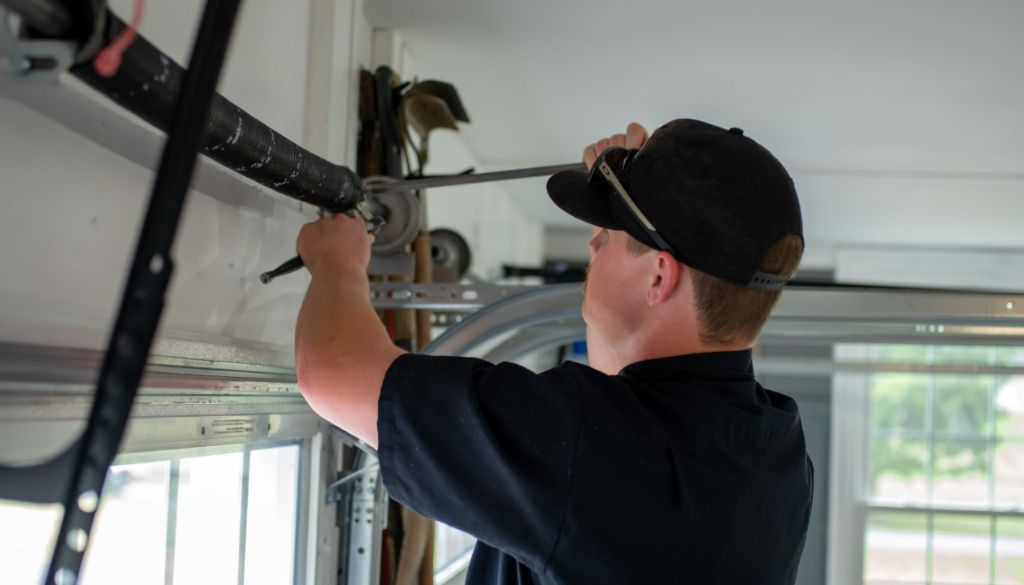
Do not force a binding door with the opener. The opener may be strong enough to move the door for a while, but forcing can worsen track, roller, hinge, cable, or opener problems. If the door binds severely, stop using it until it is inspected.
Sensors, reversing, and noise that looks like a mechanical problem
Not every troublesome door is failing mechanically. Garage door sensors can stop or reverse a closing door when the safety system detects something in the path. Residential automatic garage door openers in the United States are required to comply with entrapment-protection requirements for operators manufactured on or after January 1, 1991. Safety guidance emphasizes that a garage door should have a sensor or electric eye that reverses the door if someone enters the closing path.
That safety system depends on proper installation, use, and maintenance. Photoelectric sensors must be correctly positioned and aligned. If they are blocked, dirty, bumped out of place, or not communicating properly, the door may refuse to close or may reverse. Homeowners sometimes mistake this for binding because the door starts downward and then returns upward.
A sensor problem does not usually create squeaking or grinding by itself, but it can appear alongside mechanical issues. For example, a door may be noisy because it needs lubrication, while also reversing because the sensor path is blocked. Treat these as separate clues.
Clean the sensor lenses gently and make sure nothing is stored between them. Look for obvious misalignment, such as one sensor pointing away from the other. Do not bypass the sensors to make the door close. Entrapment protection exists because a moving garage door can injure people, pets, and property. If the safety system will not work reliably after basic cleaning and alignment checks, schedule service.
A practical inspection routine for noisy doors
A short, consistent routine is better than waiting until the door becomes loud enough to bother the whole house. Perform this inspection with the door closed at first, then operate it only if it appears safe.
This routine does not replace professional garage door inspection, but it catches many problems early. It also gives you better information if you need to call for help. Saying “the door grinds halfway up on the left side after lubrication” is far more useful than saying “the door is loud.”
Lubrication mistakes that make doors worse
Garage door lubrication is simple, but it is easy to overdo. More lubricant does not mean better movement. Too much product attracts dust and grit, especially in garages where sawdust, road salt, leaves, or household storage debris are present.
The most common mistake is spraying the tracks heavily. Rollers should roll inside the tracks, not slide through a wet channel. A greasy track can collect grime and create a grinding paste. Clean tracks usually perform better than oily ones.
Another mistake is using the wrong product as the primary lubricant. Silicone-based lubricant is a sensible choice for hinges, rollers, and springs. Oil-based products can attract dirt, which undermines the point of maintenance. If old residue is already present, wipe away what you can before applying a small amount of the right product.
Homeowners also sometimes lubricate only the loudest area. That may quiet the door for a day or two, but the system needs balanced attention. Hinges, rollers, and springs work together. If one section is dry, others may be close behind.
Finally, lubrication cannot fix everything. It will not straighten a bent track, repair a worn roller, restore a damaged cable, correct a failed spring, or make an improperly installed opener safe. If the door remains noisy after cleaning and lubrication, the noise is telling you to look deeper.
Opener strain: when the motor is blamed for the door
A garage door opener is often the first part homeowners suspect because it makes sound and has a motor. Yet many opener problems begin with the door. The opener is designed to move a balanced, freely operating door. If the door is heavy, dragging, or binding, the opener may become louder as it works harder.
Listen to the opener with context. If the opener makes noise while the door moves roughly, inspect the door first. If the door moves smoothly by hand after safe disconnection, the opener may deserve closer attention. If the door is difficult to move manually, the opener is probably reacting to a door problem.
Garage door installation quality also matters. An opener installed on a poorly balanced or misaligned door can struggle from the start. Safety standards and product certification are important, but proper installation, maintenance, and use are just as important to safe operation. Qualified installation is especially important when adding or replacing an automated operator.
If an older opener lacks modern safety features, or if its sensors are missing, damaged, or unreliable, replacement may be safer than repeated repair. Garage door replacement is not always necessary, but opener replacement can be appropriate when safety equipment cannot be made reliable.
When noise points to springs or cables
Spring and cable problems are among the most important to recognize early. A noisy door with a visible cable issue should not be operated. Look for cables that are frayed, slack, off their drums, or hanging unevenly. Look at the spring area without touching it. A torsion spring mounted above the door should appear intact and properly positioned. If anything looks separated, distorted, or unusual, stop.
A spring system balances the door’s weight. When it is not doing its job, the door can become heavy, uneven, or unpredictable. The opener may grind or strain. The door may bind in the tracks. Rollers and hinges may wear faster because they are carrying stress they were not meant to carry.
Some homeowners are tempted to adjust torsion springs after watching a quick video. That is a poor risk trade-off. The stored energy in garage door springs can cause serious injury if released unexpectedly. Professional technicians use the right tools, procedures, and judgment. This is one of the clearest lines between homeowner maintenance and professional garage door repair.
Deciding between repair, replacement, and continued maintenance
Not every noisy garage door needs replacement. Many doors quiet down after cleaning, proper lubrication, and minor hardware tightening. If the panels are sound, the tracks are straight, the rollers are in good condition, and the spring system is balanced, continued garage door maintenance may be all that is needed.
Repair makes sense when specific components are worn or damaged but the door system is otherwise solid. Rollers, hinges, sensors, opener parts, and weather seals can often be addressed without replacing the whole door. Tracks may need professional adjustment or replacement if they are bent or misaligned. Springs and cables require professional service.
Garage door replacement becomes a more reasonable discussion when multiple major components are worn, the door is damaged in a way that affects movement, or the system cannot be made safe and reliable. A door with repeated binding, damaged panels near hardware points, poor balance, and an aging opener may cost more to keep patching than to replace thoughtfully.
The age of the opener and the reliability of the safety system should also influence the decision. Entrapment protection is not an optional convenience. A door that moves quietly but has unreliable sensors is not a properly functioning system.
What to tell a repair technician
A clear description saves time. Instead of only reporting that the garage door is noisy, describe the sound, the location, and the timing. Mention whether the problem happens during opening, closing, or both. If the opener reverses, say where the door is when it reverses. If lubrication helped briefly, mention that too.
Photos can help if there is visible damage, but do not move parts to get a better picture. A technician can assess springs, cables, tracks, rollers, opener operation, garage door balance, and sensor function in person.
Be honest about recent changes. If someone bumped the track with a vehicle, replaced storage near the sensors, painted the door, installed new flooring near the threshold, or attempted a DIY adjustment, say so. Small details often explain sudden changes in operation.
A quieter door is usually a healthier door
Garage doors do not need to be silent, but they should sound consistent. A familiar hum from the opener and a smooth rolling sound from the door are normal. New squeaks, grinding, rattling, or binding deserve attention because they reveal friction, vibration, resistance, or safety system trouble.
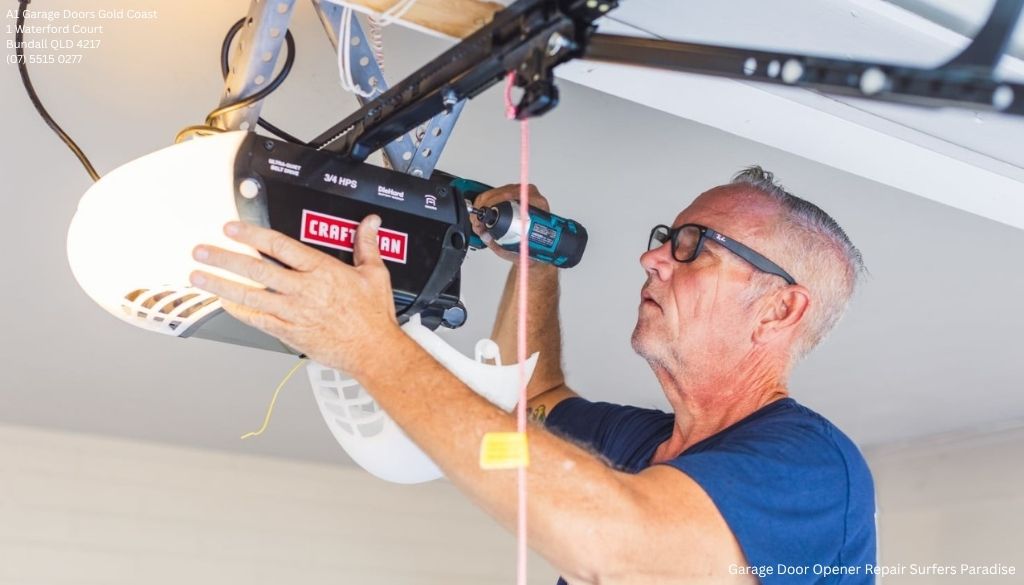
The best first steps are simple: inspect carefully, clean the tracks, lubricate the correct moving parts with a suitable product, test the safety sensors, and watch how the door moves. Respect the parts that store force, especially torsion springs and cables. Do not force a binding door, and do not bypass safety devices to get through one more day.
A garage door is the largest moving system in many homes. Treating noise as useful information protects the door, the opener, the people who use the garage, and the budget you would rather spend on something other than emergency repair.