Garage Door Maintenance Guide for Photoelectric Sensors
A garage door is one of the few moving systems in a house that combines weight, electricity, springs, tracks, cables, rollers, and daily family traffic. Most days it works so routinely that people stop thinking about it. The door rises, the car pulls out, the door closes, and the house moves on.
That routine is exactly why the photoelectric sensors deserve steady attention. They are small, usually mounted low near the garage door tracks, but they are part of the safety system that helps prevent the door from closing on a person, pet, bicycle, box, or anything else in the path of travel. In residential automatic garage door openers in the United States, federal safety requirements call for entrapment protection, such as a photoelectric “electric eye” sensor or an equivalent safety system. That requirement exists because a closing garage door can cause serious injury when the safety reversal system does not work as intended.
Good garage door maintenance is not only about quiet hinges or fresh garage door lubrication. It is also about confirming that the door stops and reverses when it should. A smooth, quiet door that fails to reverse is not a well-maintained door. It is a hazard with a polished surface.
What photoelectric sensors actually do
Photoelectric garage door sensors work as part of the opener’s entrapment protection system. In simple terms, they monitor the doorway while the garage door opener is trying to close the door. When the system detects that the path is blocked, the opener should not continue closing the door as if nothing is there. A properly functioning opener should reverse when closing onto an obstruction.
That last sentence matters because homeowners often judge garage door safety by whether the door moves. If the opener responds to the remote, the wall button lights up, and the door travels from open to closed, the system feels healthy. But motion alone does not prove safety. The more important question is whether the opener reacts correctly when something interrupts the closing path.
The Consumer Product Safety Commission has warned repeatedly about non-reversing garage door openers. The risk is not theoretical. Fatal entrapment incidents involving automatic garage doors have been documented, which is why regular testing and working safety features are not optional details. They are part of responsible ownership.
In the field, sensor problems often show up in ordinary ways. A door starts down, then comes back up. A homeowner presses and holds the wall control because the door will not close normally. Someone assumes the opener is “being temperamental.” Those symptoms can come from several causes, but the safety system should always be part of the garage door troubleshooting process. If the sensor system is not installed, is not working, or has been bypassed, the door should not be treated as safe.
Why sensor maintenance belongs in routine garage door maintenance
A garage door system ages in pieces. The opener may last for years, while garage door rollers wear unevenly. Garage door cables can be under stress even when they look normal from across the room. Garage door tracks can shift slightly after repeated use. Garage door springs, including torsion springs on many residential systems, carry forces that should be respected. The photoelectric sensors are only one part of that system, but they interact with the whole door because they influence whether the opener is allowed to complete a closing cycle.
A proper garage door inspection should therefore include both mechanical and safety checks. The mechanical side looks at movement, balance, hardware, and wear. The safety side asks a different question: if something goes wrong during closing, does the system respond correctly?
Safety reversal systems should be tested monthly. That is a practical interval because garage doors are used often and because small changes can happen without drawing attention. A sensor can be bumped while sweeping. Storage items can crowd the doorway. Children can move toys near the tracks. A homeowner can replace flooring, paint trim, reorganize shelves, or install equipment in the garage and unintentionally affect the clear path that the sensors monitor.
Monthly testing also keeps the issue visible. People tend to notice a noisy roller, a shaking door, or a broken spring because those problems interrupt daily use. A safety sensor issue may only reveal itself during a close cycle under specific conditions. Waiting until an emergency moment is poor maintenance.
The monthly safety test, done with care
Testing should be deliberate, not casual. The goal is to confirm that the automatic garage door opener reverses appropriately and that the photoelectric system is present and working as part of the entrapment protection setup. If the door fails the test, the correct response is not to keep trying until it behaves. The opener should be adjusted according to the owner’s manual or inspected by a professional.
A short, consistent testing routine is better than an elaborate one that never gets done. Use the same approach each month so the result is easy to compare over time.
That procedure sounds simple, but the discipline behind it is important. Testing is not a contest to “beat” the door. It is a controlled check of the safety system. Anyone uncomfortable performing the test should schedule a garage door inspection instead, especially if the door already shows signs of rough movement, damaged hardware, or inconsistent opener behavior.
What a failed sensor test tells you
A failed safety test means the system needs attention. It does not automatically identify one single failed part. The problem may involve the photoelectric sensors, the opener settings, the condition of the door, or another part of the entrapment protection system. The right next step depends on the door, the opener, and the specific behavior observed.
If the door keeps closing when it should reverse, treat that as a serious safety concern. Non-reversing garage door openers are a known hazard. Do not rationalize the failure because the door “usually works” or because no one stands under it. Garage doors are used by tired adults, hurried teenagers, delivery drivers, visitors, and sometimes children who do not understand the danger. A safety feature that works only sometimes is not a dependable safety feature.
If the door refuses to close and reverses immediately, that can be frustrating, but it is different from a door that closes through an obstruction. The system may be preventing a close because it believes the path is blocked or because the sensors are not communicating correctly. In that situation, the temptation is to override the system, hold the wall button, or look for a quick workaround. That is the moment to slow down. The safety system is there for a reason, and forcing operation without understanding the cause can turn a nuisance into a hazard.
The owner’s manual matters here. Manufacturers provide procedures for adjustment and troubleshooting, and the CPSC guidance points homeowners toward the manual or a professional inspection when reversal fails. garage door installers Gold Coast If the manual is missing, the safest practical route is to have the opener and door inspected by a qualified technician rather than guessing.
Sensor problems are sometimes symptoms, not the whole problem
Photoelectric sensors are easy to blame because they are visible and relatively small. A homeowner sees a blinking light or a door that reverses and assumes the “eyes” are bad. Sometimes that is true. Sometimes the sensors are doing their job and calling attention to a broader issue.
For example, if a door is not traveling properly because the garage door tracks are affected or the door hardware is worn, the opener may struggle during operation. If garage door rollers bind, the door can move unevenly. If garage door cables or springs are compromised, the entire system may behave unpredictably. Garage door balance also matters because an opener is not supposed to compensate indefinitely for a poorly balanced or mechanically distressed door.
This is why professional garage door maintenance looks at the whole assembly. The opener is not separate from the door. The sensors are not separate from the opener. The springs, tracks, rollers, cables, and door sections all contribute to safe movement. When one part changes, the others can show the effect.
There is also a difference between garage door repair and simple maintenance. Cleaning around a sensor area, checking that nothing blocks the doorway, and testing reversal are reasonable homeowner tasks. Working around torsion springs, replacing cables, adjusting high-tension parts, or correcting serious alignment and balance problems belongs in professional territory. Springs and cables operate under force. Treating them casually can create immediate danger.
Where photoelectric sensors fit during garage door installation
Garage door installation is not complete just because the door opens and closes. For an automatic residential opener, entrapment protection must be part of the system. That may be a photoelectric sensor setup or an equivalent safety system. A responsible installation includes confirming that the protection is installed, connected, and working before the job is treated as finished.
This matters during opener replacement as well. A homeowner may call for a new garage door opener because the motor is old, noisy, or unreliable. The upgrade should not ignore the safety system. If an older opener lacks modern entrapment protection or does not reverse properly, garage door replacement or opener replacement becomes a chance to bring the system into safer working order.
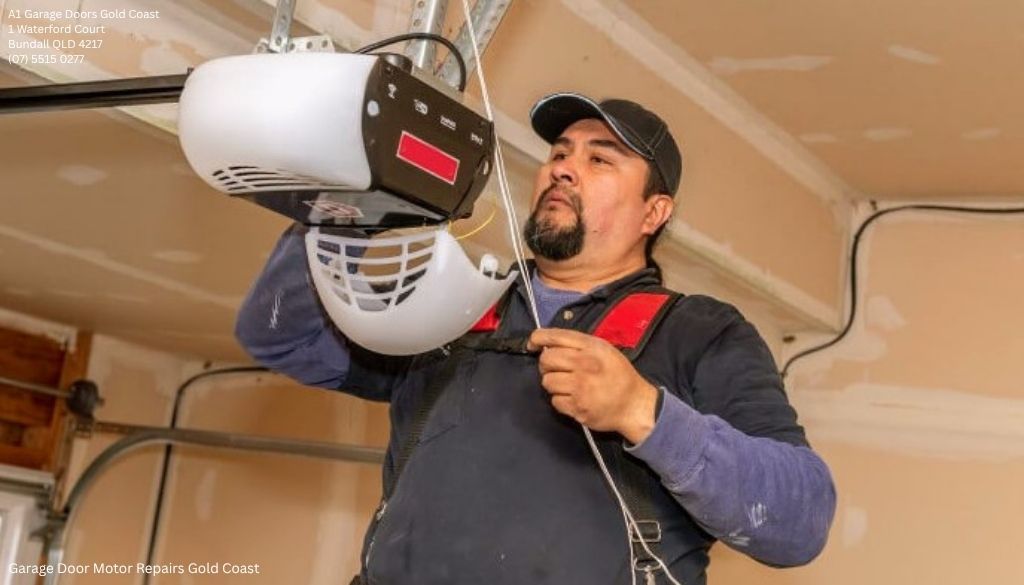
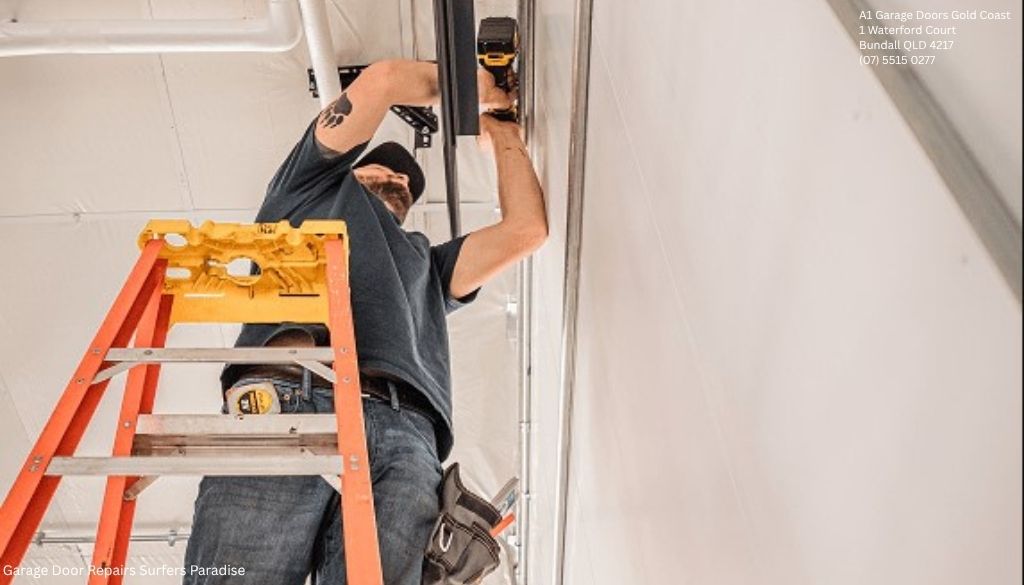
The physical work of installation and repair deserves respect. Garage door opener work often happens at ceiling height, in cramped spaces, with hand tools, awkward reaches, and electrical components nearby. Those conditions increase the chance of mistakes when a person rushes or improvises. A staged, careful approach is not just neat workmanship. It reduces risk for the installer and for the people who will use the door afterward.
During a professional installation, the technician should not only mount parts and connect controls. The closing cycle should be tested. The safety reversal should be confirmed. The photoelectric sensors or equivalent entrapment protection should be checked as part of the handoff. Homeowners should also be shown how to perform the monthly safety check, because installation quality and long-term maintenance work together.
Children and garage door safety
Children change the safety equation around any automatic garage door. They move quickly, hide in places adults do not expect, press buttons out of curiosity, and may not understand that a moving door can trap or injure them. CPSC guidance has emphasized teaching children garage door safety and keeping remote controls out of their reach.
That advice is easy to underestimate. Many families leave remotes in vehicles, clipped to visors, sitting on workbenches, or tucked near entry doors. Wall controls may be reachable by children depending on where they are installed. A garage can also look like a play area because it holds bicycles, balls, scooters, and sports equipment. The more a garage functions as a family staging area, the more important the safety system becomes.
Teaching children not to run under a moving garage door is basic, but it should not be the only protection. Adults forget. Children test boundaries. Visitors may not know the house rules. The photoelectric sensors and reversal system provide a layer of protection when human behavior is imperfect. That is the point of safety equipment. It does not replace supervision, but it helps reduce risk when supervision is not perfect.
A useful household rule is that garage door controls are not toys and that no one tries to “race” the closing door. Another is that if the door behaves strangely, children should tell an adult rather than keep pressing buttons. Those habits sound small, yet they support the same goal as monthly testing: preventing a closing door from becoming an entrapment hazard.
The connection between lubrication, balance, and sensor reliability
Garage door lubrication will not repair a failed photoelectric sensor, but it can still support the overall system. A door that moves cleanly places less strain on the opener and makes abnormal behavior easier to notice. When a door squeals, shakes, drags, or jerks, homeowners get used to disorder. That background noise can hide a new problem.
Balanced movement matters for the same reason. Garage door balance is a mechanical condition, not a sensor feature, but it affects how the opener performs. If the door is heavy in operation or does not travel predictably, the opener may behave inconsistently. A sensor system can be blamed for a reversal when the underlying issue belongs to the door assembly.
There is a judgment call here. A homeowner can observe the door, listen for changes, and schedule service when movement changes. But balance problems, spring issues, and cable concerns should not be treated as casual do-it-yourself adjustments. Garage door springs, especially torsion springs, are high-risk components. If a door seems unusually heavy, drops too quickly, will not stay in position, or shows signs that cables or springs are not behaving correctly, stop treating the opener as the main issue and arrange professional garage door repair.
A well-maintained system should feel predictable. The door should not surprise you. The opener should not strain in a way that changes from week to week. The sensors should not be viewed as an annoyance to defeat. All these parts contribute to garage door safety.
When troubleshooting reaches its limit
Some garage door troubleshooting is appropriate for a careful homeowner. You can look for obvious objects in the doorway, confirm the sensor area is not blocked, review the owner’s manual, and perform the monthly reversal test. You can also notice patterns, such as whether the problem happens only when closing, whether it began after something was moved in the garage, or whether the opener behaves differently from the wall control and remote.
But troubleshooting has a limit. If the door fails to reverse, that limit has been reached from a safety standpoint. If the opener or door needs adjustment beyond the owner’s manual, a professional should inspect it. If the door has mechanical symptoms involving garage door tracks, rollers, cables, springs, or balance, the sensor system should not be isolated from the larger repair question.
A practical way to decide whether to call for service is to ask whether the problem affects safety, force, or control. A cosmetic dent may be watched. A noisy hinge may be part of routine maintenance. A closing door that does not reverse, a door that moves unpredictably, or a spring and cable concern deserves faster action.
Common situations that justify a professional inspection include:
Those are not scare tactics. They are boundaries. The opener is an electrical and mechanical device attached to a large moving door. Repair decisions should reflect that reality.
Older openers deserve special attention
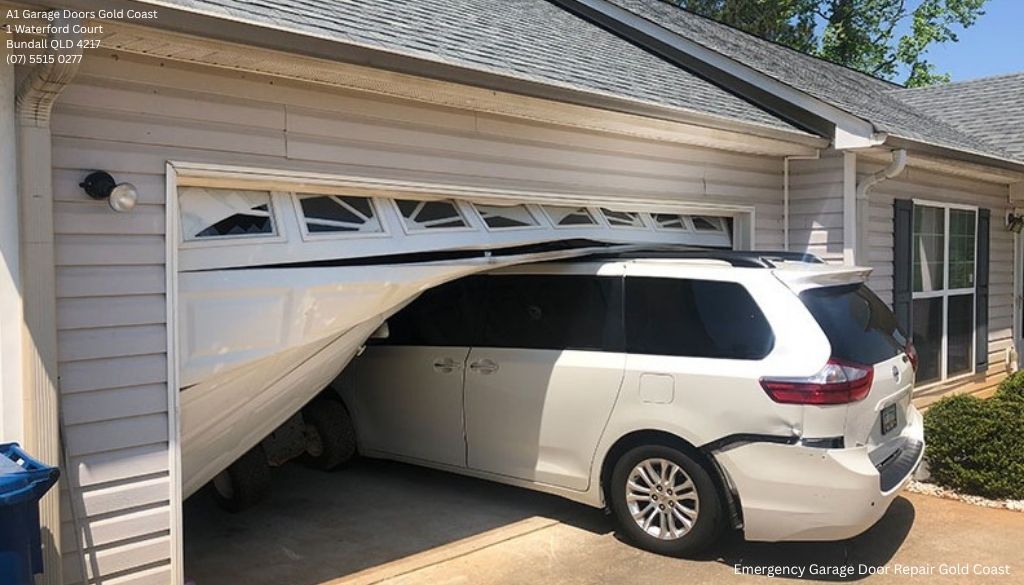
Many garages still contain older equipment. Some openers have been in place for years through multiple homeowners. Manuals are lost, remotes are mismatched, and no one remembers when the safety system was last tested. In those garages, a photoelectric sensor check becomes even more important.
Automatic residential garage door openers are covered by mandatory federal safety requirements, including entrapment protection such as photoelectric sensors or an equivalent system. If a homeowner does not know whether the opener has compliant safety protection, the system should be inspected. If the opener does not reverse properly, it should not be trusted simply because it has worked for a long time.
Age also affects homeowner expectations. People become accustomed to the behavior of their own door. If it always closes loudly, they accept the noise. If it always needs a second press, they work around it. If a family member learned years ago to hold the wall button until the door closes, that workaround becomes household tradition. From a garage door safety perspective, those habits should be challenged.
Garage door replacement or opener replacement may be the right choice when old equipment cannot be brought into reliable working condition. Replacement is not always necessary for every sensor issue, but there are cases where continuing to nurse an outdated, non-reversing, or unreliable system makes little sense. A professional inspection can separate a correctable adjustment from a broader replacement discussion.
What good maintenance looks like over a year
The best garage door maintenance program is steady and unspectacular. It does not depend on panic after a failure. It combines monthly safety testing with periodic attention to the door’s movement and condition. It also includes restraint, knowing when not to touch parts that carry force or require specialized adjustment.
Over a typical year, a homeowner should become familiar with the normal sound and motion of the door. Not obsessed, just aware. The opener should start and stop consistently. The door should not scrape or bind. The sensor area should stay clear. The monthly reversal test should become as ordinary as checking a smoke alarm or replacing an air filter.
A professional garage door inspection can add value because a technician sees the system as a whole. The sensor issue that frustrates a homeowner may connect to opener settings, mechanical drag, balance, tracks, rollers, cables, or spring condition. An experienced technician also recognizes when a door is safe to adjust and when replacement should be discussed.
The trade-off is simple. Preventive attention costs time, and professional service costs money. Neglect costs uncertainty. With garage doors, uncertainty is not a small matter because the system moves through the same space where people walk, load groceries, carry tools, and let children pass.
A practical standard for sensor care
Photoelectric sensors do not need drama. They need to be present, unobstructed, and working. The opener needs to reverse when closing onto an obstruction. The safety system needs to be tested monthly. If it fails, the door needs adjustment according to the owner’s manual or a professional inspection.
That standard is clear enough for daily ownership and serious enough to prevent complacency. It also keeps sensor maintenance in the right context. The sensors are not decorative parts. They are not optional conveniences. They are part of the entrapment protection system on an automatic residential garage door opener.
A garage door that opens smoothly but cannot be trusted to reverse is not properly maintained. A garage door opener that requires repeated workarounds is not merely quirky. A sensor system that has been ignored for years is not proven safe by habit. The better approach is calm, regular attention: test it, observe it, maintain the door around it, and call for garage door repair when safety, balance, springs, cables, tracks, rollers, or opener behavior move beyond ordinary homeowner care.
That is how photoelectric sensor maintenance should feel in a well-run home or property. Not complicated. Not fearful. Just consistent, informed, and grounded in the fact that garage door safety depends on the system doing the right thing at the exact moment it matters.