Garage Door Installation Safety Guide for Home Projects
A garage door looks familiar enough that many homeowners underestimate it. It opens, closes, rolls along tracks, and responds to a wall button or remote. That familiarity can make a home garage door installation feel like a straightforward weekend project. The risk is that the door system combines weight, movement, overhead work, electrical controls, pinch points, and entrapment protection in one place. When something is installed incorrectly or left untested, the hazard is not theoretical.
Automatic residential garage door openers in the United States are subject to a mandatory federal safety standard. They must include entrapment protection, such as a photoelectric electric eye sensor or an equivalent safety system. That requirement exists because a closing garage door can trap a person, child, pet, or object if the system does not detect resistance or obstruction and reverse properly. Safety reversal is not an optional upgrade. It is a central part of garage door safety.
For a homeowner planning garage door installation, garage door replacement, or related garage door repair, the safest approach is not to rush through the mechanical work and hope the opener handles the rest. The safest approach is staged, deliberate, and skeptical. You assume nothing is safe until it has been checked. You treat the opener, sensors, door movement, balance, tracks, rollers, cables, and springs as parts of one system, not isolated components.
Why garage door installation deserves more caution than it often gets
Most home projects allow for some trial and error. Paint can be touched up. A shelf can be re-leveled. A cabinet hinge can be adjusted. A garage door is different because the consequences of a poor adjustment may appear while the door is moving. If a closing door does not reverse when it should, the problem may not reveal itself until someone or something is in its path.
Federal safety rules for automatic residential garage door openers reflect that reality. The required entrapment protection exists because automatic doors have caused fatal entrapment incidents. That is not a reason to panic, but it is a reason to be disciplined. A garage door opener should reverse when closing onto an obstruction. Photoelectric garage door sensors, or an equivalent protective system, are meant to reduce the chance that a person or object will be pinned beneath a closing door.
The safety issue does not end on installation day. Consumer safety guidance has repeatedly warned that non-reversing garage door openers are hazardous. The safety reversal system should be tested monthly. If the door fails to reverse, it should be adjusted according to the owner’s manual or inspected by a professional. That monthly habit is one of the simplest forms of garage door maintenance, and it matters as much after a new installation as it does after years of use.
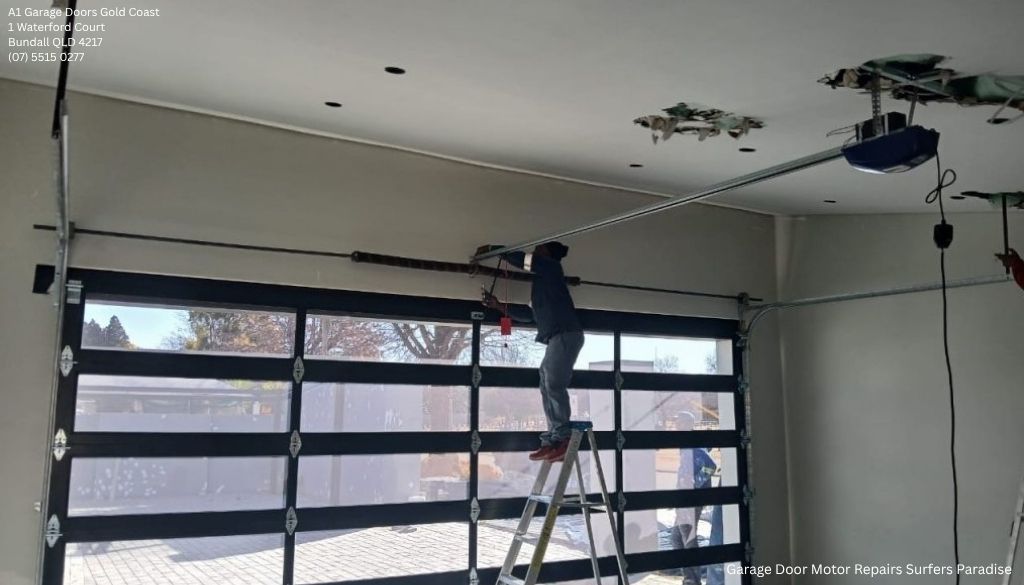
There is also the physical side of the work. Garage door installation and repair involve working at ceiling height, often in tight spaces, with hand tools, awkward postures, and components above shoulder level. Those conditions create real risk even before the door is operating. A careful installation plan should account for body position, tool control, overhead work, and the limited room that many garages provide around vehicles, stored items, steps, walls, and the ceiling.
Start by deciding whether this is truly a home project
Some homeowners are comfortable with mechanical work and have the patience to read an owner’s manual closely. Others are trying to save money on a project that may be outside their skill set. The hard part is being honest before the old door is removed or the new opener is halfway installed.
A home project may be reasonable when the task is limited, the manufacturer’s instructions are complete, the work area is clear, and the installer understands the safety systems involved. Even then, the work should be treated as installation and verification, not just assembly. Every component that affects door movement or reversal must be checked before normal use.
A professional should be involved when the door does not move predictably, when a safety reversal test fails and simple owner’s-manual adjustments do not correct it, or when the homeowner is unsure how to evaluate the system. The same judgment applies during garage door troubleshooting. A door that opens but will not close, closes but does not reverse, or behaves inconsistently should not be treated as a nuisance. It should be treated as a safety problem until proven otherwise.
Garage door springs deserve particular caution. Homeowners often hear terms such as torsion springs and assume they are just another replaceable part. Springs are part of the system that helps manage the door’s weight and movement. If the spring system, garage door cables, rollers, or tracks appear damaged, misaligned, or unfamiliar, the safest decision is usually to stop and call a qualified technician. The point is not pride. The point is controlling risk around a moving overhead door.
The garage itself can be a hazard before the door moves
Installation and repair work often happen in the worst part of the house for body mechanics. Garages are crowded. Floors slope. Lighting may be poor. Tools end up on the ground. People work above their heads while stepping around boxes, ladders, bicycles, water heaters, or parked vehicles. OSHA guidance for installation and repair work highlights risks from ceiling-height work, cramped spaces, hand tools, and awkward postures. Those risks apply directly to a garage door project.
Before touching the door, clear the work area. Not just the doorway, but the path around both sides of the opening, the floor beneath the tracks, and the area where tools and parts will be staged. Overhead work is harder when a person has to lean sideways around stored items. Awkward posture leads to shortcuts, and shortcuts are where many installation mistakes begin.
Lighting deserves more attention than it usually gets. Garage door tracks, rollers, cables, brackets, opener arms, and sensors often sit in shadow. If you cannot see clearly, you cannot inspect clearly. Temporary lighting is not glamorous, but it can prevent misalignment, missed fasteners, and poor sensor positioning.
The same applies to fatigue. A residential garage door installation can stretch longer than expected, especially when old hardware resists removal or a new opener does not line up as neatly as the diagrams suggest. When people are tired, they stop checking. They also tend to test a system too early, before the area is clear or the safety devices are confirmed. A safer project is broken into stages, with a pause before the first powered operation.
A practical safety check before installation begins
Use a short pre-work check to slow the project down and catch obvious problems. This is not a substitute for the owner’s manual or professional inspection, but it helps set the right conditions before work starts.
That last point is important. A stop rule prevents improvisation under pressure. If the door does not move smoothly, if the opener does not reverse properly, if sensor behavior is uncertain, or if you do not understand what a component is doing, the job should pause. Home projects become dangerous when the installer feels committed to finishing at any cost.
Entrapment protection is not optional
Photoelectric garage door sensors are among the most visible safety components on modern automatic garage doors. They are commonly mounted near the lower portion of the door opening and are designed to detect an obstruction across the door’s path. Federal standards require a sensor or equivalent entrapment protection on residential automatic openers. That means a garage door opener installation is incomplete if the protective system is missing, bypassed, ignored, or left untested.
The common mistake is treating sensors as accessories that can be adjusted later. They are part of the safety system, not a convenience feature. A door that closes only when the wall button is held down, or a door that reverses unpredictably, may be telling you something about sensor alignment, obstruction, wiring, or the safety logic of the opener. The right response is not to defeat the system. The right response is garage door troubleshooting that follows the owner’s manual and, when needed, professional inspection.
Children deserve specific mention because safety guidance says they should be taught garage-door safety and remote controls should be kept out of their reach. A remote control can make a door move when the person pressing the button cannot see the doorway. During installation, that risk increases because parts may be loose, tools may be under the door, and adults may be working near tracks or opener hardware. Remote controls should not be treated like harmless buttons.
A good installer also thinks about habit. Once the door is working, the household should understand that the garage door is not a toy, not a race timer, and not something to duck under while closing. Safety systems reduce risk, but they do not replace judgment.
The reversal test is a maintenance habit, not a one-time ceremony
A newly installed garage door opener should be tested before regular use, but the test should not disappear after installation day. Consumer safety guidance says safety reversal systems should be tested monthly. If the door fails to reverse, it should be adjusted according to the owner’s manual or inspected by a professional.
That monthly test is one of the most valuable forms of garage door inspection because it checks the behavior that matters most during an obstruction. A properly functioning opener should reverse when closing onto an obstruction. If it does not, the garage door sources garage door opener should not be treated as normal until the issue is corrected.
The important word is “monthly.” Many homeowners test a new opener once, then forget about it until something breaks. Dust, vibration, minor bumps near the sensors, changes in door movement, or ordinary use can affect performance over time. A garage door can sound normal and still fail a reversal test. A quiet opener is not proof of a safe opener.
Testing also creates a record in the homeowner’s mind. When a door that used to reverse properly suddenly does not, that change is useful information. It narrows the troubleshooting conversation and supports a faster decision about whether adjustment or professional service is needed.
Door movement, balance, and the parts that guide the door
A garage professional installation Gold Coast door is guided and supported by several components working together. Garage door rollers move along garage door tracks. Garage door cables and springs help manage the door’s motion. The opener moves the door through its drive mechanism, but it should not be expected to overcome a poorly functioning door. If the door itself is binding, dragging, or out of balance, the opener may mask the problem for a while, then expose it in a more serious way.
Garage door balance is one of those terms that gets used casually, but it matters because the opener is not the only safety concern. A door that is difficult to move, moves unevenly, or does not stay where expected may have a mechanical problem that deserves inspection. The exact procedure for checking balance depends on the door and opener instructions, and those instructions should be followed. If the manual directs a particular method, use that method. If the results are unclear, get professional help.
Tracks and rollers also deserve close visual attention during installation and maintenance. A roller that is not seated correctly or a track that is misaligned can affect door travel. Cables should be treated with the same caution. They are not decorative lines running along the door. They are part of the moving system. If anything looks frayed, loose, displaced, or unfamiliar, do not rely on the opener to “pull through” the issue.
Garage door lubrication can be part of ordinary garage door maintenance when the owner’s manual calls for it. The key is to follow the manufacturer’s directions for what to lubricate, what not to lubricate, and how often. More lubricant is not automatically better, and lubrication is not a fix for misalignment, failed reversal, damaged hardware, or an out-of-balance door.
Working around springs without pretending they are simple
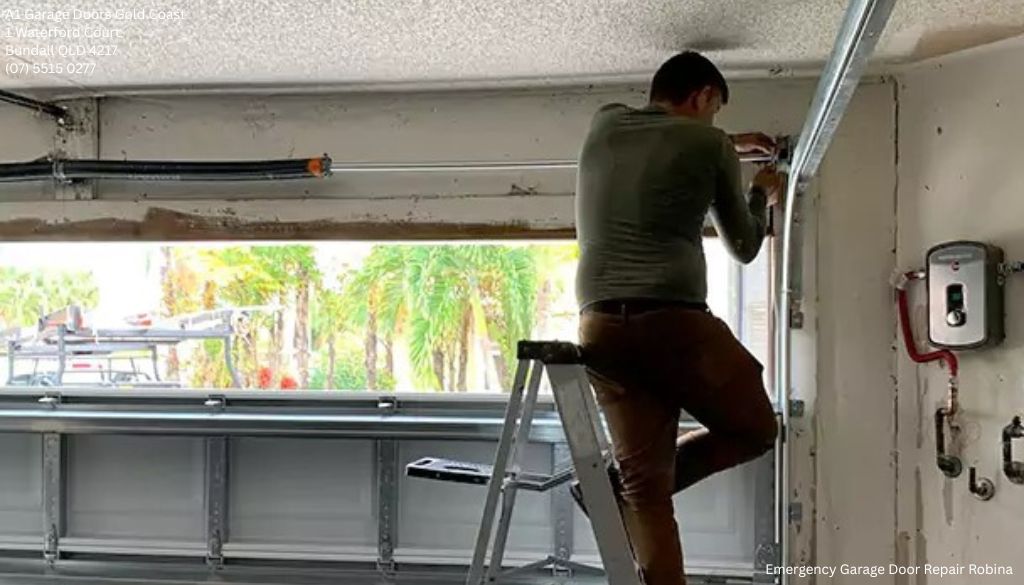
Garage door springs carry a seriousness that many homeowners do not appreciate until they see one fail or hear a technician talk about stored energy. Torsion springs, in particular, are often visible above the door opening, which can make them seem accessible. Accessible does not mean safe to adjust casually.
The safest general guidance is to avoid improvising with springs. If the project involves spring replacement, spring adjustment, unexplained cable movement, or door balance problems, a professional garage door repair service is often the prudent choice. Owner’s manuals may describe certain checks, but they should not be stretched into procedures the manual does not authorize.
Springs also affect the rest of the installation. An opener installed on a door with spring or balance problems can give a false sense of completion. The door may move, but movement alone does not prove that the system is safe. A new garage door opener should not be used to compensate for mechanical problems in the door assembly.
This is one of the places where trade-offs matter. Doing the work yourself may reduce labor cost, but the savings disappear quickly if an unsafe condition damages the door, harms someone, or requires emergency service. Professional judgment is not just about having tools. It is about knowing when not to force a system.
Installing the opener with safety in mind
Garage door opener installation brings together mechanical mounting, electrical operation, door travel limits, force settings, sensors, remotes, and user behavior. The owner’s manual is the controlling document for the specific model. The federal safety requirement establishes the baseline expectation for entrapment protection, but the manual explains how that system is installed and verified for the particular opener.
The opener should be installed only after the door assembly itself is ready for powered operation. A common sequencing error is to mount the opener early, connect it to the door, and begin testing before the door’s movement and safety hardware have been checked. That invites the opener to become a troubleshooting tool. It should not be. The door should be mechanically sound first, then the opener should be installed, adjusted, and tested.
Sensor placement and alignment should be treated as precision work. If the system uses photoelectric sensors, they need a clear path across the opening and should be protected from casual bumps as much as practical. Items stored near the doorway can interfere with the beam or lead to repeated nuisance reversals. A homeowner who responds by moving or bypassing sensors has turned a safety feature into a hazard.
Remotes and wall controls also require thought. During installation, only the person responsible for testing should control the opener. After installation, remote controls should be kept out of children’s reach. The household should know that a remote should not be pressed unless the doorway is visible and clear.
The first powered test should be slow and deliberate
The first powered operation of a newly installed or repaired garage door is not a celebration. It is a controlled test. The doorway should be clear. People should stand away from the door path, tracks, and moving hardware. Tools, ladders, packaging, and loose parts should be removed from the area. The installer should be ready to stop the opener if something behaves unexpectedly.
Listen and watch, but do not overinterpret sound alone. A garage door can make ordinary mechanical noises and operate safely, or it can sound fairly normal while a sensor or reversal system fails. The essential question is whether the door travels as intended and whether the safety systems perform correctly.
After initial travel checks, the safety reversal system must be tested according to the owner’s manual and maintained on the monthly schedule recommended by safety guidance. If the door fails to reverse, do not keep cycling the opener in hope that it will correct itself. Adjust it according to the manual or arrange for professional inspection.
A failed test is not a minor inconvenience. It means the system has not demonstrated one of its core safety functions. Until corrected, the door should not be treated as ready for normal household use.
Troubleshooting without defeating the safety system
Garage door troubleshooting can be frustrating because the symptoms often seem simple. The door will not close. The opener light flashes. The door reverses. The remote works one day and not the next. The temptation is to find the fastest way to make the door move, especially when a car is trapped inside or rain is coming.
That is exactly when discipline matters. A safety system that prevents closing may be doing its job. The response should be careful inspection, owner’s-manual guidance, and professional help when the cause is not clear. Defeating garage door sensors, ignoring a failed reversal test, or forcing a door through resistance undermines the protections the system is required to provide.
A useful way to think about troubleshooting is to separate convenience faults from safety faults. A dead remote battery, for example, is a convenience issue if the wall control and safety systems function properly. A door that does not reverse on obstruction is a safety fault. A door that moves unevenly or appears mechanically stressed is also a safety concern. Treating all problems as equal leads to bad decisions.
A compact monthly safety and maintenance routine
A monthly routine does not need to be elaborate. It does need to be consistent. Pair it with something already on the calendar, such as replacing an air filter or testing smoke alarms, so it does not become another forgotten intention.
If any part of that routine raises doubt, stop using the door as if it were fully safe. Adjust only what the owner’s manual instructs you to adjust. If the door fails to reverse or the problem involves mechanical components you do not understand, professional inspection is the safer path.
When replacement is safer than repeated repair
Garage door replacement is sometimes framed as a cosmetic upgrade, but safety can be the better reason. If an older system lacks required entrapment protection for an automatic opener, if the opener does not reverse properly, or if repeated garage door repair no longer produces reliable operation, replacement may be the practical decision. The goal is not simply a quieter door or a newer remote. The goal is a complete system that can be installed, tested, maintained, and trusted.
Replacement also resets bad habits. Many households live for years with a door that needs a special shove, a sensor that is “a little touchy,” or an opener that works only when coaxed. Those workarounds become normal until a guest, child, or new driver uses the door differently. A new installation is the right time to remove ambiguity. The door should operate predictably. The safety reversal should work. The sensors or equivalent system should be present and functional. The family should know how to use the door safely.
Cost is always part of the decision, but cost should be measured against risk and reliability. A cheap repair that leaves a non-reversing opener in service is not a bargain. A do-it-yourself installation that ends without a verified safety reversal test is not complete. A professional installation that includes proper testing and clear owner guidance may be worth more than the hardware itself.
The homeowner’s responsibility after the installer leaves
Whether the work is done by a homeowner or a technician, long-term safety belongs to the people who use the door every day. The safety system should be tested monthly. Children should be taught garage-door safety. Remote controls should be kept out of their reach. The door opening should be treated as a moving hazard, not a shortcut.
Good garage door maintenance is not dramatic. It is the habit of noticing small changes before they become larger problems. A door that starts reversing unexpectedly deserves attention. A sensor that is repeatedly bumped by stored items should be protected or the storage arrangement should change. A door that no longer passes the reversal test should be adjusted according to the owner’s manual or inspected professionally.
The best garage door installation is not the one that merely works at the end of the day. It is the one that can be operated safely, tested easily, maintained realistically, and understood by the household. That standard is higher than “the door goes up and down,” and it should be. A garage door is the largest moving system many people use at home, and its safety depends on installation choices made before the first button is pressed.