Garage Door Installation Guide for Reducing Work Hazards
A garage door installation looks straightforward from the driveway. A door, an opener, a pair of tracks, a few sensors, and a wall control. From inside the garage, the job feels different. Much of the work happens overhead. The installer works near the ceiling, often in a tight space, with hand tools, awkward body positions, and equipment that must later move a heavy door reliably and stop when something is in the way.
That combination deserves respect. A poor installation can create hazards for the person doing the work and for the people who use the door afterward. A garage door opener that does not reverse properly is not a minor inconvenience. Federal safety rules for automatic residential garage door openers in the United States require entrapment protection, such as a photoelectric “electric eye” sensor or an equivalent safety system. The reason is plain: automatic doors can injure or trap someone if safety systems are missing, misaligned, neglected, or misunderstood.
Good garage door installation is not just about making the door open and close. It is about reducing work hazards during the installation, setting up the system so the safety features function as intended, and leaving the owner with a door that can be inspected, tested, and maintained without guesswork.
The hazard starts before the opener is mounted
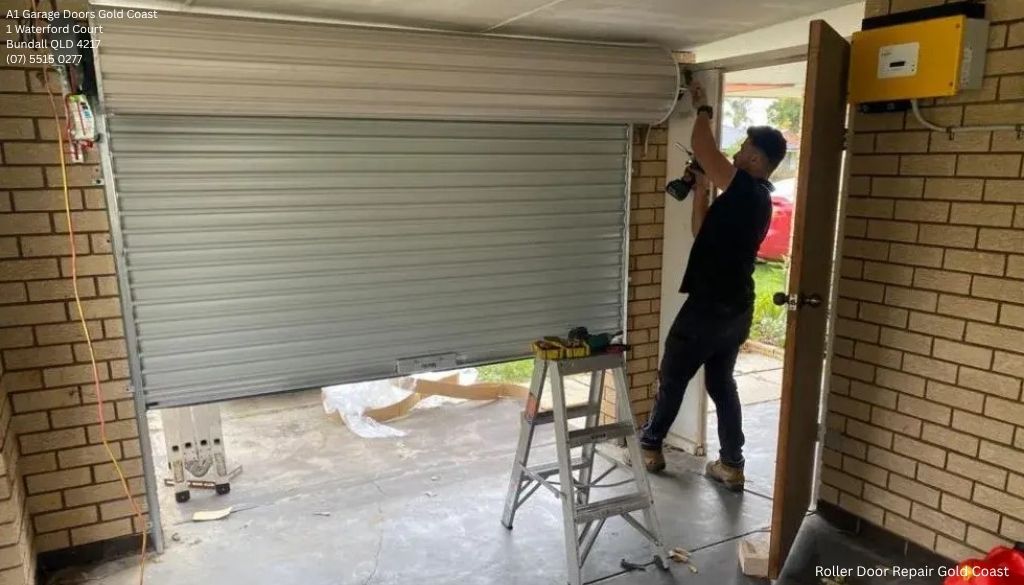
Most installation problems begin with a false sense of familiarity. People see garage doors every day, so the work feels ordinary. In practice, installation and repair share many of the hazards found in other building trades. Work happens at ceiling height. The installer may be reaching above shoulder level for extended periods. Space can be cramped, especially near stored items, vehicles, shelving, or low ceilings. Hand tools create their own risks, and awkward postures lead to poor leverage and rushed decisions.
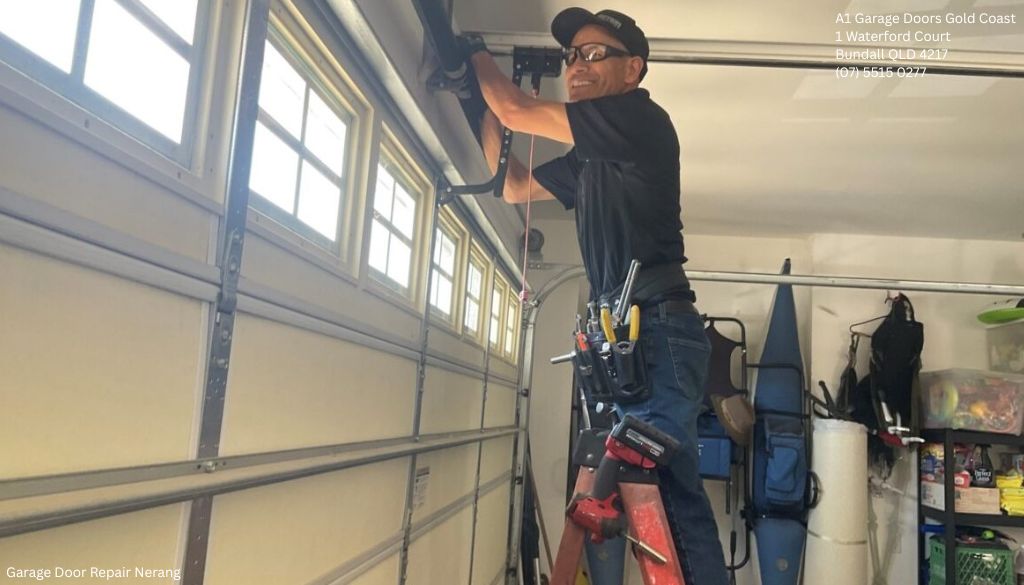
Those conditions matter even when the parts are familiar. A person standing on a ladder while aligning a garage door opener rail is already managing balance, tool control, and overhead work. If the garage is cluttered, the risk increases. If the installer is tired, working alone, or trying to hold a component in place while fastening it, the margin narrows further.
This is where professional judgment shows. Reducing work hazards often means slowing down before the visible installation begins. Clear the work area. Think through where the opener, tracks, sensors, controls, and tools will be handled. Do not treat the ceiling portion of the job as a quick reach-and-fasten task. Overhead work requires a stable setup and deliberate movement.
I have seen otherwise careful people make poor choices because they wanted to avoid moving boxes or repositioning a ladder. That is rarely worth it. A garage door system will be used for years. Taking a few extra minutes to create room around the work zone is one of the simplest forms of garage door safety.
Safety is part of the installation, not a later adjustment
The most important mistake to avoid is installing the mechanical and electrical parts first, then thinking about safety only after the door runs. On an automatic residential opener, entrapment protection is central to the system. The photoelectric sensors, often called electric eye sensors, are not optional accessories. They are part of the safety design required for modern automatic residential garage door openers.
A properly functioning opener should reverse when the closing door encounters an obstruction. That statement sounds simple, but it guides the entire installation. The opener, garage door sensors, controls, and door movement must work together. If the door closes but does not reverse as expected, the job is not finished. If the sensors are present but not functioning, the job is not finished. If the door works only after someone bypasses a safety feature, the job has moved in the wrong direction.
The Consumer Product Safety Commission has warned for years that non-reversing garage door openers are hazardous. That warning belongs in every installation conversation. A door that fails to reverse is not merely “out of adjustment.” It can create an entrapment hazard.
During garage door installation, the installer should treat reversal testing as a required step, not as a courtesy demonstration. The system should be tested before the job is considered complete, and the owner should understand that safety reversal systems need monthly testing after installation. If a door fails to reverse during those checks, the owner’s manual should be followed for adjustment, or the door should be inspected by a professional.
Working overhead without turning the garage into a hazard zone
Ceiling-height work deserves its own attention because it is one of the most common sources of installer risk. Garage door opener installation often places the worker above eye level, handling tools while looking up and reaching out. Even a simple task can become unsafe if the body position is poor.
Awkward posture is more than discomfort. It affects judgment. When shoulders fatigue, people overreach. When a ladder is placed slightly too far away, they lean. When parts are held overhead too long, they hurry fasteners or skip a check. None of those shortcuts improves the installation.
A professional approach is staged. Put the tools where they can be reached without twisting. Keep the floor clear where footing matters. Move the ladder rather than leaning from it. Avoid holding parts overhead longer than necessary. When a task requires both hands, set up the work so both hands are actually available.
This kind of hazard reduction is especially important in garages because they are rarely empty, open workrooms. They are storage areas, laundry entries, workshops, and parking spaces. The installer may be working around bicycles, shelving, extension cords, appliances, or vehicles. Cramped spaces and overhead work are a poor mix. The safer choice is to create space first and install second.
The opener must be judged by how it behaves when something goes wrong
A garage door opener can seem successful if the door moves smoothly up and down. That is not enough. The real test is what happens during a problem. If the closing door meets an obstruction, the opener should reverse. If the photoelectric path is interrupted, the system should respond as designed. The purpose of entrapment protection is to prevent the door from continuing in a dangerous condition.
This point matters because many homeowners notice only convenience failures. They call for garage door repair when the remote stops working, the opener hums, or the door refuses to close. Safety failures can be quieter. A sensor may be present but not doing its job. A reversal system may not respond correctly. A user may assume everything is fine because the door still opens.
Installation should correct that mindset from the start. The installer should explain that the garage door opener is not simply a motor. It is a controlled safety system. The motor, sensors, wall button, remote control, door movement, and reversal behavior all matter.
There is also a household education component. Children should be taught garage door safety, and remote controls should be kept out of their reach. That is not a sentimental add-on. It is part of preventing foreseeable misuse. A child playing with a remote control may not understand the weight, movement, or timing of a closing garage door. Keeping controls out of reach is a simple habit with serious purpose.
A practical safety sequence for installation day
The safest installations follow a deliberate rhythm. The exact procedure depends on the manufacturer’s instructions and the site conditions, but the hazard-reduction mindset stays consistent. The installer prepares the area, manages overhead work carefully, confirms entrapment protection, tests reversal behavior, and leaves the owner with clear expectations for inspection and monthly testing.
A concise installation-day safety sequence can help keep the work organized:
That sequence does not replace the owner’s manual or professional training. It does, however, keep the focus where it belongs. The installation is not complete when the opener runs. It is complete when the system operates safely and the person responsible for the home understands the ongoing checks.
Where garage door springs, cables, rollers, and tracks fit into the safety picture
Many homeowners use the phrase “garage door opener” to describe the entire system. Technically, the opener is only one part. The door garage door replacement services also depends on garage door springs, garage door cables, garage door rollers, and garage door tracks. Those parts affect how the door moves and whether the opener is being asked to do its job under reasonable conditions.
This article cannot responsibly give step-by-step repair instructions for springs, cables, or other loaded components without the specific system and manufacturer guidance in hand. What can be said plainly is that garage door troubleshooting should not focus only on the motor. If the door does not move properly, if it binds, if it resists closing, or if the opener behaves inconsistently, the full door system deserves inspection.
Garage door balance is especially important as a concept because an opener is not meant to compensate for a door that is fundamentally not operating as it should. When people ignore balance and movement problems, they often keep using the opener until a failure becomes obvious. By then, the issue may be more than convenience. It may affect safety testing, reversal performance, and the reliability of daily operation.
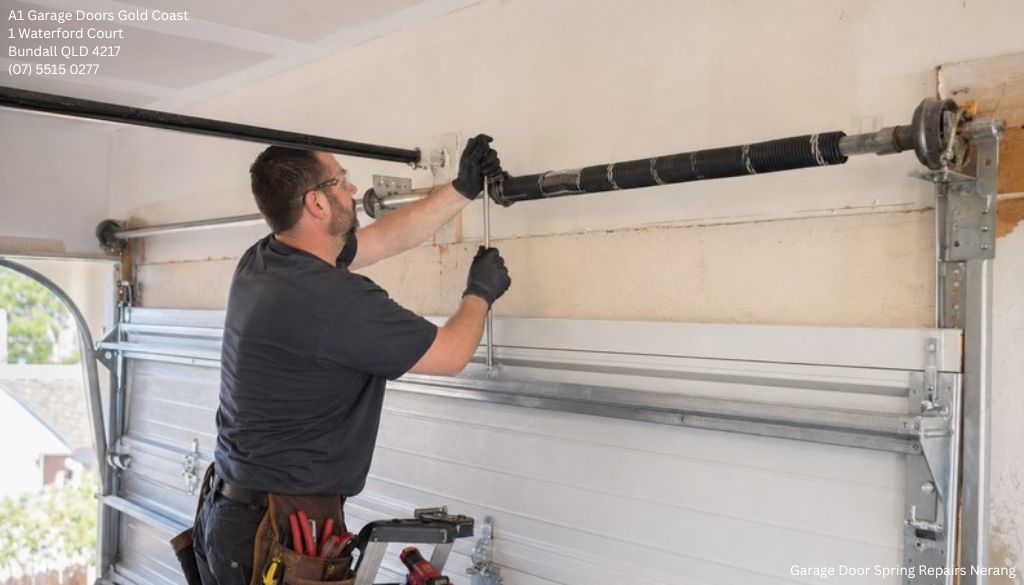
A professional garage door inspection looks beyond the button on the wall. It considers how the door travels, how the tracks guide it, whether the rollers move as expected, whether cables appear properly positioned, and whether the opener’s safety systems respond correctly. If torsion springs or other spring systems are involved, the safer course is to rely on qualified service rather than improvising. Springs and related components are central to the door’s movement, and poor handling can create serious risk.
The monthly reversal test should be treated as ownership, not maintenance trivia
The CPSC recommends monthly testing of the safety reversal system. That guidance is simple enough to remember and important enough to put on a calendar. A garage door is used repeatedly, often when people are distracted, carrying groceries, leaving for work, or arriving home at night. Safety features should not be trusted forever just because they worked on installation day.
Monthly testing also changes the way owners think about garage door maintenance. Instead of waiting until the opener fails, the owner checks whether the system still protects against entrapment. If the door fails to reverse, the owner should consult the owner’s manual for adjustment or have the system inspected by a professional. Continuing to use a non-reversing opener as if nothing is wrong defeats the purpose of the safety equipment.
This is one reason I prefer to discuss testing at the end of every installation, even with experienced homeowners. People remember the remote. They remember the keypad code. They may not remember the reversal test unless someone makes it part of the handoff. A good installer does not assume the owner knows what matters.
Garage door sensors deserve garage door sources the same attention. If the photoelectric sensors are not installed and working, the safety system is incomplete. The federal standard requires a sensor or equivalent entrapment protection on residential automatic openers. During a garage door inspection, confirming the presence and function of those sensors is not a cosmetic check. It is a core safety check.
Garage door lubrication and maintenance without losing sight of safety
Garage door lubrication is often discussed as if it were the heart of garage door maintenance. Lubrication can be part of maintaining moving equipment, but it should not distract from the safety systems that protect people. A quiet door is not automatically a safe door. A smooth door is not automatically a compliant opener installation. A door that opens every morning can still fail a reversal test.
Maintenance should be understood as a broader habit. The owner should pay attention to movement, noise, visible changes, sensor function, and reversal behavior. If a problem appears, garage door troubleshooting should start with safety, not convenience. Does the door reverse as it should? Are the garage door sensors installed and functioning? Has the owner’s manual been consulted? Is professional garage door repair needed?
There is a practical trade-off here. Some homeowners want to handle every small task themselves. Others call for service at the first unfamiliar sound. The better approach sits between those extremes. Owners can and should perform routine safety checks that the manufacturer and safety agencies recommend. They should also recognize when a condition calls for a trained professional, especially if adjustment attempts do not restore safe reversal or if the issue involves components they do not understand.
When repair is not enough
Garage door replacement becomes part of the conversation when the existing system cannot be made safe or reliable through reasonable service. That decision should not be driven only by appearance or noise. Safety performance matters. If an automatic residential opener lacks required entrapment protection, if the safety reversal system cannot be made to work properly, or if the door system repeatedly fails inspection, replacement may be the more responsible choice.
A replacement project should be handled with the same hazard-reduction mindset as a new garage door installation. The work area still needs to be controlled. Overhead work still needs care. Sensors or equivalent entrapment protection still need proper installation and testing. The owner still needs to learn monthly checks.
The mistake is thinking of replacement as a reset button that solves everything automatically. New equipment still depends on correct installation. A new opener with mismanaged safety testing is not a safe installation. A new door in a cluttered work area still exposes the installer to unnecessary hazards. Replacement is an opportunity to correct old problems, but only if the work is performed deliberately.
The handoff is part of the job
A garage door installation does not truly end when tools are packed away. The handoff matters because the homeowner becomes the person most likely to notice a future problem. A professional handoff should be clear, brief, and focused on what affects safety.
The owner should know that automatic residential garage door openers require entrapment protection. They should know that a properly working opener reverses when closing onto an obstruction. They should know that the safety reversal system should be tested monthly. They should know that children should not play with garage door controls and that remote controls should be kept out of their reach. They should also know that a door failing to reverse calls for action, not tolerance.
The best handoffs avoid technical overload. Most people do not need a lecture on every component. They need to understand the behaviors that matter. If the door does not reverse, stop and address it. If the sensors are not working, address it. If the system behaves differently after months of normal use, schedule a garage door inspection or follow the owner’s manual where appropriate.
A short owner safety checklist after installation
The owner’s ongoing role should be simple enough to repeat. A short checklist is useful because monthly safety habits are easy to forget:
Those five checks do not turn a homeowner into an installer. They help the homeowner recognize when the system no longer behaves as a safe automatic door should.
Reducing hazards means respecting both sides of the door
Garage door safety has two sides. One side protects the worker during installation or repair. The other protects the household during years of use. The same professional attitude serves both. Clear the space. Avoid rushed overhead work. Treat cramped conditions and awkward postures as real hazards. Install required entrapment protection. Test the reversal system. Teach the owner what to check every month.
The details of a particular opener, door, track layout, or sensor arrangement will vary. Manufacturer instructions matter, and professional service is appropriate when the work exceeds the owner’s skill or when a safety feature does not perform correctly. What should not vary is the standard of care.
A garage door is one of the largest moving systems in a home. It is used casually, often several times a day, by adults, guests, teenagers, and sometimes children who do not understand the risk. Installation is the moment to build safety into the system rather than hope to add it later. A careful garage door installation reduces immediate work hazards and gives the owner a safer, more reliable system to maintain.