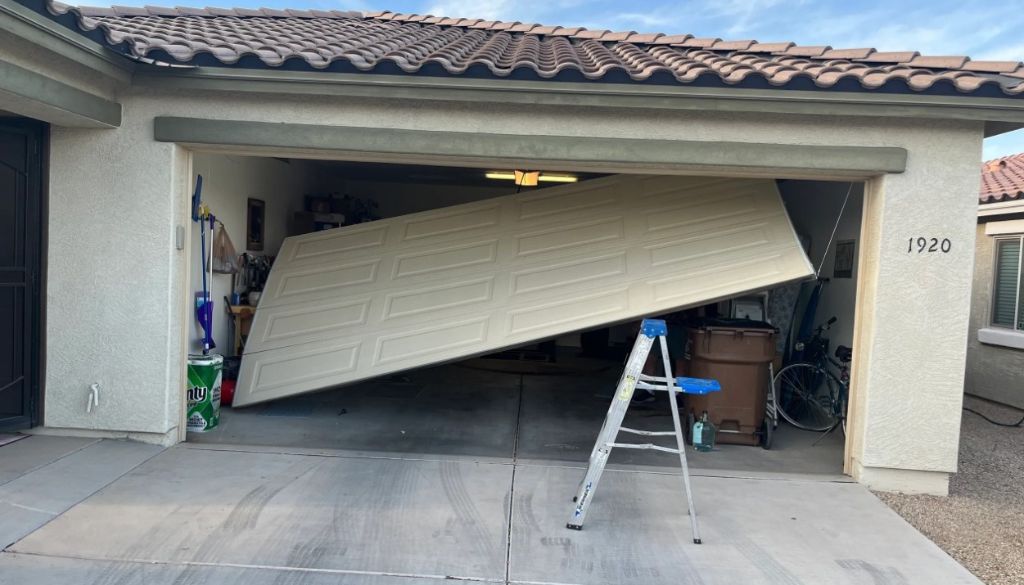
Garage Door Inspection for Entrapment Protection Systems
A garage door is one of the largest moving objects in a home, and when it is paired with an automatic garage door opener, the safety systems deserve the same attention as the springs, cables, rollers, and tracks. The door may look ordinary from the driveway, but the opener is doing more than lifting and lowering a panel. It is expected to recognize trouble while the door is moving and respond before a person, pet, bicycle, toy, or storage bin is pinned beneath it.
That is the purpose of entrapment protection. In plain terms, entrapment protection systems are the features that help prevent a closing garage door from trapping someone or something. In the United States, automatic residential garage door openers are covered by a mandatory federal safety standard, and they must include entrapment protection such as a photoelectric electric eye sensor or an equivalent safety system. That requirement did not appear by accident. Federal safety officials have documented fatal entrapment incidents involving automatic garage doors, and they have repeatedly warned that non-reversing openers are a hazard.
A professional garage door inspection should treat entrapment protection as a core safety item, not an accessory. The door may be quiet, the opener light may work, and the remote may have fresh batteries, but none of that proves the system will reverse when it should. A proper inspection asks a more serious question: if something goes wrong while the door is closing, will the opener stop or reverse before harm occurs?
Entrapment protection is not just an opener feature
Many homeowners think of garage door safety as one small pair of garage door sensors near the floor. Those sensors matter, but entrapment protection involves the interaction of the opener, the door, the hardware, and the person using it. The opener can only perform as designed if the garage door itself is in reasonable condition. A badly binding door, damaged garage door tracks, worn garage door rollers, frayed garage door cables, or a door that is out of balance can affect the way the system behaves.
That is why garage door inspection and garage door maintenance should not be reduced to wiping the sensor lenses or pressing the wall button once. The inspection should consider the whole operating system. An opener attached to a door with a mechanical problem is not a safe repair strategy. It is a machine compensating for a fault. In the field, that distinction matters. A technician who hears a door scrape through the track or sees the opener rail strain during travel will not be reassured by the fact that the remote works.
Entrapment protection is also not a substitute for supervision. Federal safety guidance has long emphasized that children should be taught garage door safety and that remote controls should be kept out of their reach. That advice sounds simple, but it addresses a real pattern: garage doors become background equipment in a household, and children often treat moving doors as a game or shortcut. No safety device should be asked to replace good habits.
What a safety reversal system is expected to do
A properly functioning automatic opener should reverse when the door is closing onto an obstruction. That statement is the heart of the inspection. If the garage door opener does not reverse when it should, the system needs attention. It may require adjustment according to the owner’s manual, or it may need to be inspected by a professional. Continuing to use a non-reversing opener is not a minor inconvenience. Federal safety officials have identified non-reversing garage door openers as a hazard.
Photoelectric sensors, often called garage door sensors or electric eyes, are the most familiar form of entrapment protection. They are generally mounted low on each side of the door opening, where one sensor sends an invisible beam to the other. If something breaks that beam while the door is closing, the opener should respond by stopping or reversing. The exact behavior can vary by system, but the purpose is consistent: detect an obstruction in the path before the door closes on it.
Other equivalent safety systems may exist, but the important point for a homeowner or property manager is not the label. The important point is whether the installed system complies with the opener’s design and performs correctly during testing. A missing, bypassed, misaligned, or ignored safety system should be treated seriously.
The monthly test many people skip
Safety reversal systems should be tested monthly. That interval can surprise homeowners, especially if the door has operated for years without obvious trouble. The reason for monthly testing is straightforward: these systems live in a rough environment. Garages collect dust. Storage items shift. Brooms, trash cans, bicycles, and boxes knock into sensor brackets. Moisture and temperature changes affect materials. A door that worked correctly last season may not be behaving the same way today.
Monthly testing is not meant to turn every homeowner into a garage door repair technician. It is meant to reveal a problem before the next close cycle matters. If the door fails a reversal test, the response should not be to try the button a few more times and hope the issue clears. The opener should be adjusted according to the owner’s manual or inspected by a professional. That guidance is especially important because some garage door problems look small from the outside while involving parts under significant tension or load.
A practical monthly safety check can stay simple:
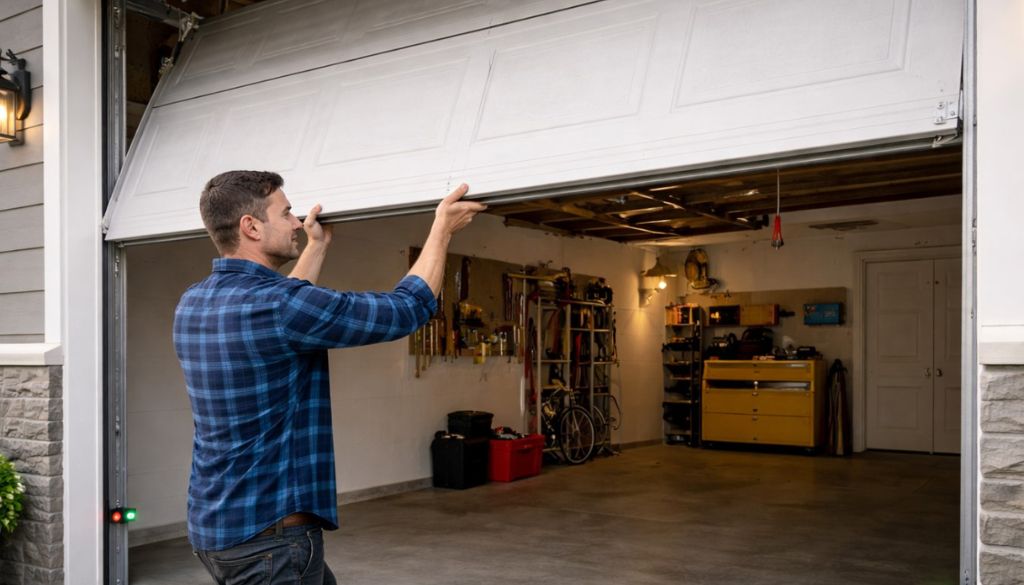
That list is short on purpose. The goal is not to perform a full service call every month. The goal is to verify that the entrapment protection system still responds when asked.
Why visual inspection comes before adjustment
A good garage door inspection starts with observation. Before anyone reaches for tools, the door should be watched and heard. Does the door hesitate as it starts down? Does one side seem to lag? Does the opener sound strained? Are the garage door tracks visibly bent or obstructed? Are the garage door rollers moving smoothly or chattering through the track? Are the garage door cables sitting where they belong, or do they show signs that something is uneven?
These observations matter because entrapment protection problems can be symptoms rather than root causes. For example, an opener that reverses unexpectedly may be responding to resistance in the door system. That resistance could come from track alignment, worn rollers, a damaged section, inadequate garage door lubrication where lubrication is appropriate, or a balance issue. On the other hand, a door that fails to reverse when it should may point toward a safety system problem, an opener setting issue, or another defect requiring professional diagnosis.
The important judgment is knowing when not to keep adjusting. There is a temptation during garage door troubleshooting to treat every problem as a sensitivity setting or sensor alignment issue. That can lead to unsafe results. An opener should not be tuned to overpower a mechanical fault. If the door is heavy, jerky, crooked, or visibly damaged, the inspection needs to move beyond the opener.
The role of door balance in entrapment protection
Garage door balance is often discussed in relation to convenience, but it also affects safety. A balanced door is easier for the opener to move and easier to control. When the balance is poor, the opener may work harder, the door may move unpredictably, and safety testing may become less meaningful because the equipment is no longer operating under normal conditions.
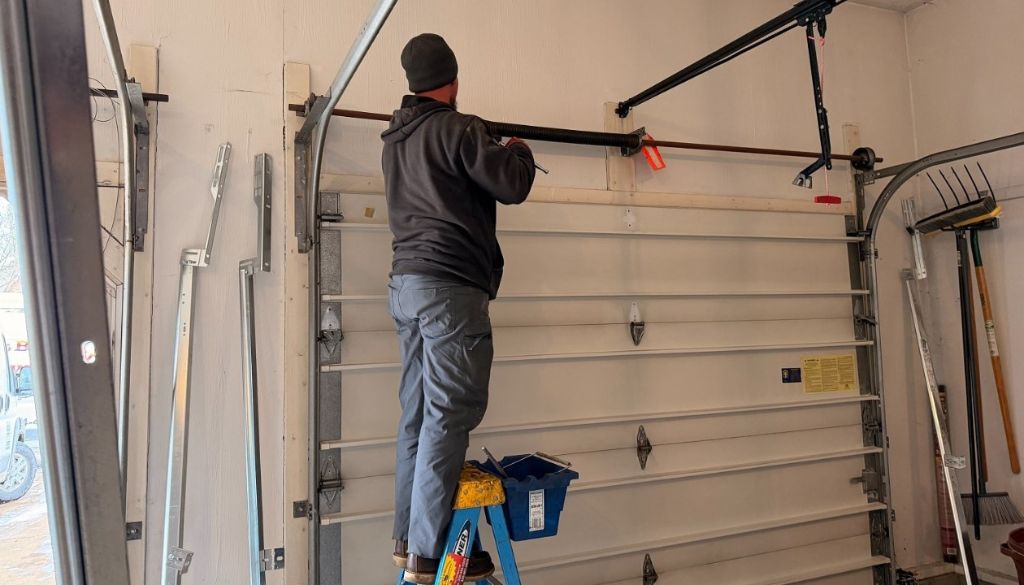
The balance of a garage door is tied closely to the spring system. Many residential doors use garage door springs, including torsion springs, to counterbalance the weight of the door. These parts are not decorative hardware. They store force, and improper handling can be dangerous. A homeowner can observe symptoms, such as a door that slams, drifts, or feels unusually heavy, but spring adjustment and replacement are professional work.
This is where garage door repair requires restraint. A person may be comfortable changing remote batteries or clearing a box away from a sensor, but torsion springs and related hardware are a different category. If a safety reversal test raises suspicion that the door is not moving normally, the next step should be a qualified inspection, not a trial-and-error spring adjustment.
Photoelectric sensors: common issues and cautious judgment
Garage door sensors are small, exposed, and easy to disturb. Many sensor problems begin with something ordinary. A storage tote gets pushed against a bracket. A child’s bicycle leans into the sensor. Dust or debris collects on the lens. A homeowner sweeps the garage and bumps the mounting hardware. After that, the door may refuse to close, reverse during closing, or behave inconsistently.
The first inspection is usually visual. Are both sensors still aimed at one another? Is anything blocking the path between them? Are the brackets secure enough that vibration will not move them each time the door operates? Are the sensor housings damaged? These questions do not require guesswork. They require patience and enough light to see what is actually happening near the bottom of the opening.
Still, sensor inspection has limits. If the sensors appear clean and aligned but the opener continues to act unpredictably, the problem may be electrical, mechanical, or internal to the opener. That is when professional garage door troubleshooting becomes the safer route. The goal is not simply to make the door close again. The goal is to restore the safety function that the opener is required to provide.
When an opener should not be nursed along
Homeowners often ask whether an older opener can be kept in service with minor adjustments. Sometimes the answer is yes, if the opener has the required entrapment protection, passes safety testing, and works with a mechanically sound door. But there is a firm line: a non-reversing garage door opener is a hazard. If the opener fails to reverse as it should, it needs correction according to the owner’s manual or professional inspection.
There is also a practical point about age and compatibility. Garage door replacement or new garage door installation often changes the operating conditions for the opener. A new door may move differently than the old one. Hardware, tracks, and balance may be updated. The opener must be evaluated as part of the system, not assumed safe because it worked with the previous door. A responsible installer checks entrapment protection during the commissioning of the door and opener together.
Garage door opener replacement may be appropriate when the existing equipment cannot provide reliable entrapment protection. That decision should be based on inspection and performance, not fear. At the same time, safety systems are not an area where “good enough most of the time” is good enough. The opener either responds properly during a safety test, or it does not.
Children, remotes, and the habits around the door
The most technically perfect safety system can still be undermined by poor use. Children should be taught that a garage door is not a toy, not a race, and not a place to stand while it is moving. Remote controls should be kept out of their reach. Wall controls should be used responsibly. The door should be watched while it closes, especially in a busy household where bikes, scooters, pets, and people move through the garage opening throughout the day.
This matters because entrapment protection is reactive. It responds after a condition occurs. Good habits prevent the condition from occurring in the first place. A parent who stops a child from ducking under a moving door has done more than any sensor can do. A homeowner who keeps the threshold clear has reduced the chances that the system will be tested under stress.
Professional garage door safety advice sometimes sounds repetitive because the risks are familiar. Keep the opening clear. Do not let children play with controls. Test the system monthly. Repair failures promptly. These are not dramatic recommendations, but they are the practices that keep a convenience appliance from becoming a hazard.
What professionals look for during an entrapment protection inspection
A professional inspection combines safety testing with mechanical evaluation. The technician is not merely asking whether the opener can lift the door. The technician is asking whether the opener, door, and safety devices operate together in a way that protects against entrapment. That includes observing the closing cycle, confirming the presence and function of required safety features, checking for obvious damage or obstruction, and evaluating whether the door itself moves properly.
A careful inspection also respects the hazards of the work. Installation and repair around garage doors often happen at ceiling height and in cramped spaces. Technicians use hand tools near moving parts, work around opener rails and ceiling-mounted equipment, and may need awkward postures to access brackets, wiring, or hardware. Those conditions are one reason staged, careful work matters. Rushing through a garage door repair can create new risks, both for the technician and for the household that will use the door afterward.
A professional may also recognize patterns that are easy to miss. A sensor bracket that has been bent and straightened several times may not hold alignment. A door section that flexes during closing may indicate a broader issue. A track obstruction may only appear when the door reaches a certain point in travel. A cable concern may not announce itself loudly until the door is already unreliable. These details turn a simple service call into a true garage door inspection.
Repair, maintenance, or replacement: making the right call
Not every safety problem requires garage door replacement. Many issues are maintenance or repair items. A blocked sensor path, a dirty lens, or a loose bracket may be straightforward. A door that needs appropriate garage door lubrication or minor hardware attention may be brought back into reliable operation. A failing opener, damaged safety system, serious balance problem, or compromised door structure may justify a deeper repair plan.
The decision should start with the safety test and the mechanical condition of the door. If the entrapment protection system fails, that is the priority. If the door itself is binding or out of balance, that must be addressed rather than hidden by opener adjustment. If springs, cables, or structural components are involved, a professional should handle the work.
A reasonable decision path looks like this:
The trade-off is usually cost versus risk. Delaying service may seem economical, but it leaves a known safety function in doubt. Replacing an opener that cannot be made reliable may feel premature until the risk is considered clearly. A garage door is used too often, and by too many people, to leave entrapment protection to luck.
Installation details that affect long-term safety
Garage door installation is not complete when the door opens and closes a few times. The final safety checks matter. The installer must confirm that the opener and entrapment protection system operate as intended with the installed door. That includes the safety reversal behavior and the function of photoelectric sensors or equivalent protection.
This is especially important when an opener is added to an existing door. A manual door may have unnoticed mechanical problems because a person naturally compensates while lifting it. The person feels drag, adjusts their grip, or slows down. An automatic opener does not have human judgment. It follows its settings and safety systems. If the door is not in proper condition before opener installation, the finished system may be unreliable or unsafe.
During a new installation, clean routing, secure mounting, and clear sensor placement all support future reliability. The sensors should not be positioned where normal storage will constantly block them. Controls should be placed and used with safety in mind. The owner should know how to perform the monthly safety test and where to find the opener manual. A good installer does not leave behind mystery equipment. The homeowner should understand the basics of what was installed and what needs to be checked.
The owner’s manual still matters
Many service problems become harder because the manual was discarded or ignored. The owner’s manual explains the opener’s intended operation, safety test procedure, and adjustment method. When a door fails to reverse properly, federal safety guidance points homeowners back to adjustment according to the owner’s manual or professional inspection. That is an important distinction. The manual is the approved reference for that specific opener, not a random habit passed down from a neighbor.
If the manual is missing, homeowners should be cautious about improvising. Opener designs vary, and a setting or test method that applies to one unit may not apply to another. When the issue involves entrapment protection, guessing is poor practice. A professional can identify the equipment, evaluate the door, and determine whether the system can be adjusted, repaired, or should be replaced.
Manuals also help owners understand normal behavior. Some openers flash lights or refuse to close when sensors are blocked. Some symptoms that feel like opener failure are actually safety responses. Understanding that difference helps homeowners avoid disabling or bypassing a protective feature out of frustration.
Why bypassing sensors is never a repair
Few things make a garage door system more dangerous than bypassed safety equipment. When sensors are out of alignment or the door refuses to close, the inconvenience is immediate. A car may be stuck outside. Weather may be coming in. Someone may be late for work. Under that pressure, people look for shortcuts. Holding a button, moving a sensor out of the way, or defeating a safety feature can seem like a temporary workaround.
The trouble is that temporary workarounds become normal habits. The system no longer performs the protection it was designed to provide. A non-reversing or improperly protected opener is exactly the kind of hazard safety officials warn about. If the garage door sensors are preventing the door from closing, the right response is to find out why. The sensors may be doing their job by detecting an obstruction or signaling a fault.
A professional garage door repair call should restore the safety function, not silence it. If the door only works when a protection feature is defeated, the door does not work correctly.
A practical standard for every household
The standard for a residential automatic garage door should be simple: the door closes smoothly, the opener reverses when it should, the photoelectric sensors or equivalent protection are present and functional, and the people in the home use the system responsibly. Anything short of that deserves attention.
Monthly testing is a small habit, but it changes the relationship between the homeowner and the equipment. Instead of waiting for a failure, the owner verifies the safety system before an incident. Instead of assuming the opener is fine because it moves, the owner confirms that it responds to obstruction. Instead of treating garage door maintenance as noise reduction only, the owner treats it as part of household safety.
A garage door inspection for entrapment protection systems is not about alarm. It is garage door installation services about respect for a heavy moving door and the people who pass under it every day. The same door that protects a vehicle and seals a home can become dangerous if its safety systems are missing, ignored, or out of service. Regular testing, careful observation, professional judgment, and prompt repair keep the convenience of an automatic garage door from outrunning its safeguards.