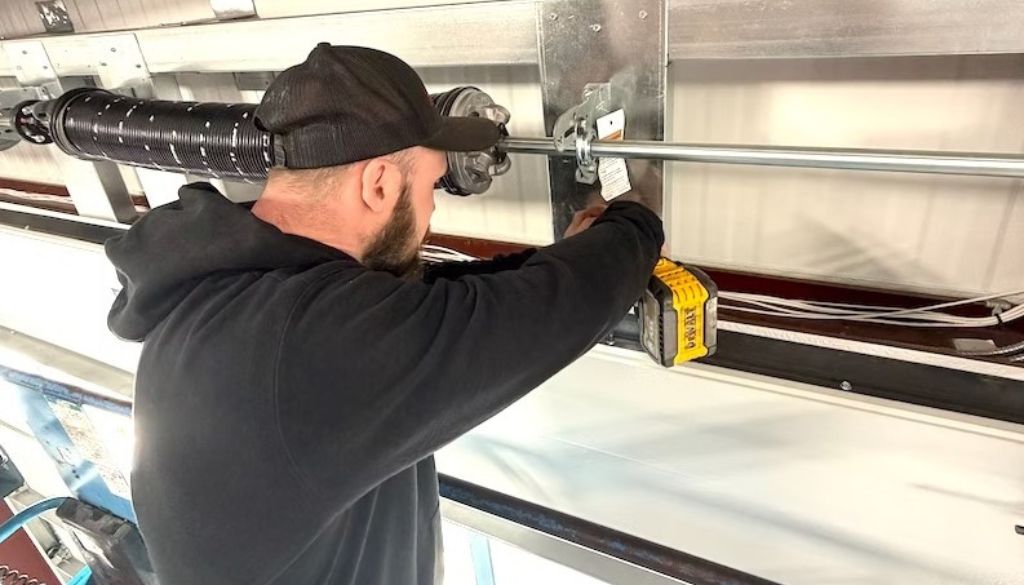
Garage Door Inspection Checklist for Safety Reversal Systems
A garage door is one of the largest moving objects in a home, and when it is connected to an automatic garage door opener, its safety system matters every time the wall button or remote is pressed. The door does not need to be old, noisy, or visibly damaged to deserve attention. A safety reversal system can be present and still fail if it is misaligned, obstructed, adjusted incorrectly, or ignored during routine garage door maintenance.
The point of a garage door inspection is not to make the door look neat. It is to confirm that the door and opener behave safely under ordinary use. The most important question is simple: if something is in the path of a closing door, will the system detect the hazard and reverse?
That question sits at the center of modern garage door safety. Automatic residential garage door openers in the United States are covered by a mandatory federal safety standard. They must include entrapment protection, such as photoelectric “electric eye” garage door sensors or an equivalent safety system. Federal safety guidance has also warned for years that non-reversing garage door openers are a hazard, and that safety reversal systems should be tested monthly. If the door fails to reverse, the opener should be adjusted according to the owner’s manual or inspected by a qualified professional.
For homeowners, property managers, and anyone responsible for a garage used by children, guests, tenants, pets, or employees, that monthly test is not busywork. It is a basic part of ownership.
What the safety reversal system is supposed to do
A residential automatic opener should not simply push a garage door downward until the motor stops. It must have a way to respond when the closing door encounters an obstruction or an entrapment risk. In common residential setups, that protection often includes photoelectric sensors mounted near the lower part of the door opening. These are the familiar small units facing each other across the door path, sometimes called electric eyes.
When the sensors work properly, they create an invisible beam across the opening. If something interrupts the beam while the door is closing, the opener should stop the close cycle and reverse the door. The exact design can vary by manufacturer, but the safety purpose is consistent: the system must protect against entrapment.
There is also a mechanical reversal function associated with how the opener reacts when the closing door meets resistance. Safety guidance has long emphasized that a properly functioning opener should reverse when closing onto an obstruction. That is why a garage door inspection should not stop after glancing at the sensor lights. The inspector or homeowner should confirm actual reversing behavior, not just the presence of parts.
This is where many routine checks fall short. I have seen plenty of clean-looking garages where the sensors were installed, the opener light worked, and the remote made the door move, yet the owner had not tested the reversal system in years. A door that moves is not automatically a safe door. Movement only tells you the opener has power and can run the door through a cycle. It does not prove that the safety system will respond when needed.
Why monthly testing is the right habit
A monthly safety reversal test may sound frequent until you think about how garages are used. Tools get leaned against the wall. Storage bins shift. Brooms, bicycles, strollers, sports gear, and garden equipment migrate into the sensor area. Children press buttons. Remote controls end up in vehicles, drawers, backpacks, and sometimes within reach of curious hands. Even a careful household changes from week to week.
The Consumer Product Safety Commission has repeatedly warned that non-reversing openers create a hazard. Its safety guidance calls for monthly testing of the safety reversal system. That monthly interval is practical because it is short enough to catch problems before they become normal, but not so burdensome that it requires a service appointment every time.
A good routine does not need to be dramatic. Pick a day that already carries a home maintenance habit, such as the first Saturday of the month or the day you change HVAC filters. Run the garage door through a deliberate test. Watch the door. Watch the sensors. Confirm that the system reverses properly. If it does not, stop using the automatic function until the issue is corrected.
This is also the right time to reinforce household rules. Children should be taught that garage doors are not toys, that they should not stand or run under a moving door, and that remotes and wall controls are not for play. Remote controls should be kept out of children’s reach. That is not a minor detail. A working safety system reduces risk, but it should not become the only barrier between a child and a moving door.
The inspection mindset: do not start with tools
A professional garage door inspection begins with observation. Before touching adjustment screws, moving sensors, or testing force settings, look at the system as a whole. A garage door opener is installed overhead, tied into a door that moves along tracks, assisted by springs, and connected through brackets, arms, rollers, hinges, and cables. The safety reversal system is part of that larger assembly.
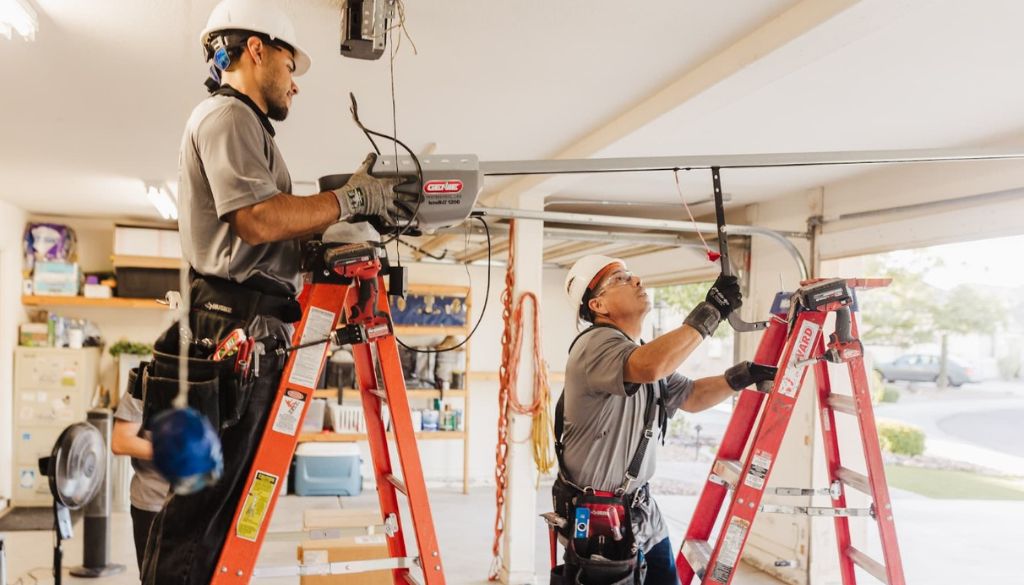
Installation and repair work around garage doors can involve physical hazards. Work often happens at ceiling height, in cramped positions, with hand tools, ladders, brackets, wiring, and awkward body angles. That is one reason a careful, staged approach matters. A rushed person standing on a ladder while reaching across an opener rail is not improving safety. They may be creating a second hazard.
For a homeowner, the first pass should be visual and operational. Stand inside the garage with a clear view of the door opening. Keep people and pets away from the area. Do not put hands near moving hardware. Do not try to hold the door back while it moves. Do not reach around the tracks, cables, rollers, springs, or opener arm during operation. If the door makes an unusual movement, binds, drops unevenly, or appears unstable, stop the test and call for garage door repair.
The goal is to separate simple owner-level checks from work that belongs to a trained technician. Testing the safety reversal system is a homeowner responsibility. Adjusting, repairing, or replacing major parts may not be.
A practical monthly safety reversal checklist
Use this checklist as a focused monthly routine. It is intentionally short because a test that people actually perform is more useful than a long document that stays in a drawer.
That last point matters. A failed reversal test is not something to “watch for a while.” It is a failed safety function. The opener should not be treated as acceptable simply because it still opens and closes.
Reading the sensor area carefully
Photoelectric garage door sensors are simple in concept, but the area around them deserves careful attention. They need a clear line across the door opening. If the sensor path is blocked, the opener may refuse to close, reverse unexpectedly, or behave inconsistently depending on the system. If they are misaligned, dirty, loose, or physically damaged, the door may not respond as designed.
During a garage door inspection, look at both sides of the opening. Are the sensors facing each other? Are they mounted securely? Is anything stored close enough to bump them? Is the beam path clean and open? A cardboard box placed casually near the track can cause a nuisance one day and hide a deeper issue the next. A child’s bicycle wheel can sit directly in the path. A trash can can be shoved just far enough to disturb a bracket.
Do not rely only on indicator lights. Lights can help, but the true test is behavior. When the door is closing and the beam is interrupted, the system should reverse. If it does not, the garage door opener needs attention.
This is also where garage door troubleshooting becomes more disciplined. Instead of repeatedly pressing the remote and hoping the door eventually closes, stop and identify what changed. Was something placed near the sensors? Did a bracket get bumped? Has the garage been reorganized? Is the problem constant or intermittent? Repeatedly overriding a safety-related issue trains everyone in the household to ignore the system’s warning signs.
The obstruction reversal test
The sensor test checks whether the system responds when the beam is interrupted. The obstruction reversal test checks whether the opener reacts when the closing door meets resistance. Federal safety guidance says safety reversal systems should be tested monthly, and if the door fails to reverse, it should be adjusted according to the owner’s manual or inspected by a professional.
The owner’s manual is important because opener designs and adjustment procedures vary. Some openers have settings that control travel limits and closing force. Others use electronic setup procedures. Guessing at those settings can make the system worse. Too little closing force may prevent normal operation. Too much can defeat the protective purpose of the reversal system.
A common homeowner mistake is to treat force adjustment as a way to overcome a door problem. If the door is hard to move, crooked, binding in the garage door tracks, or affected by a balance issue, increasing opener force may mask the symptom while increasing risk. The opener is not supposed to be a brute-force device that drags a defective door through its cycle. If the door itself has a mechanical problem, the answer is garage door repair, not forcing the opener to work harder.
This is especially important when garage door springs or torsion springs are involved. Springs carry the lifting load of the door system. Garage door cables, rollers, and tracks also affect how smoothly the door moves. These parts are not decoration, and they are not good candidates for casual adjustment. If the door does not move correctly, if it is out of balance, or if the opener seems to strain, a professional should inspect the full system.
What a failed reversal test can mean
A failed reversal test does not point to only one possible defect. It means the safety function did not perform as expected, and that should trigger a controlled response. Sometimes the cause is simple, such as an obstruction near the photoelectric sensors. Sometimes it points to settings, damage, installation problems, or mechanical resistance in the door system.
The safest response is to stop automatic operation until the problem is corrected. If the owner’s manual provides a clear adjustment or test procedure, follow it exactly. If the system still fails, call a professional for garage door repair. For rental homes, shared garages, and commercial-like residential settings, the safer administrative choice is to document the failure, restrict use, and arrange service promptly.
It is tempting to separate the opener from the rest of the door, but the two interact. A door with poor garage door balance can make the opener work outside its intended range. A roller problem can create uneven movement. A cable issue can affect door travel. Track problems can cause binding. Poor garage door installation can leave the entire system fighting itself. In any of these cases, the reversal system may become unreliable, not because the electronic safety feature is irrelevant, but because the door it controls is not moving correctly.
A professional inspection should look beyond the symptom. The technician should evaluate opener behavior, sensor function, door movement, balance, hardware condition, and whether the installation matches safe operating expectations. The point is not to sell garage door replacement when a repair will do. The point is to identify whether the system can be made safe and reliable.
When the opener is older or unfamiliar
Many homeowners inherit a garage door opener when they buy a house. The remote works, the wall button works, and the unit may have been hanging from the ceiling for years without much thought. That does not mean the safety system has been checked, upgraded, or maintained.
Automatic residential garage door openers in the United States are subject to a mandatory federal safety standard requiring entrapment protection such as photoelectric sensors or an equivalent safety system. If an opener lacks the required safety protection, or if its reversal system cannot be made to work reliably, the responsible path is professional evaluation and likely replacement of the opener. Keeping an unsafe opener in service because it still lifts the door is a poor trade.
Age alone is not the only issue. Unknown history matters. Was the opener installed correctly? Were sensors removed because they were inconvenient? Were force settings changed to overcome a binding door? Was a garage door replacement performed while the old opener remained in place without proper adjustment? These are not rare questions in the field. The garage often carries evidence of years of small fixes, partial upgrades, and “it worked well enough” decisions.
If you cannot locate the owner’s manual, many manufacturers provide manuals by model number. The model label is usually on the opener housing, although finding and reading it may require safe access. If safe access is not practical, do not climb awkwardly or work at ceiling height just to satisfy curiosity. The physical hazards of overhead installation and repair work are real. A service technician can identify the equipment and test it properly.
The role of the door itself in safety reversal performance
The best opener cannot compensate for a neglected door forever. Garage door maintenance supports safety because it keeps the moving system predictable. A door that moves smoothly and maintains proper garage door balance gives the opener a reasonable operating condition. A door that drags, twists, rattles, or binds forces the opener to respond to problems that may have nothing to do with the motor.
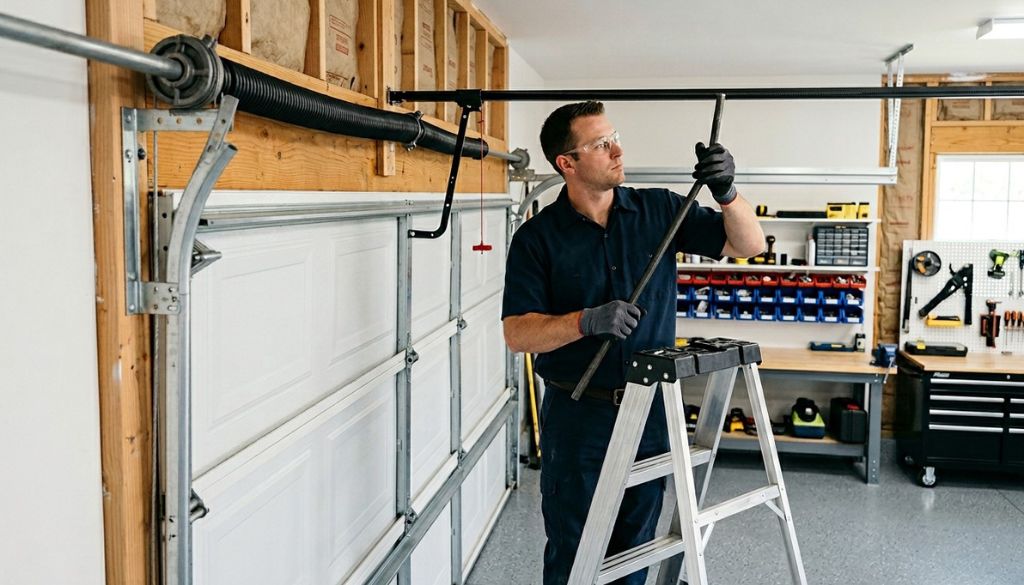
Garage door rollers should travel in the tracks without obvious binding. Garage door tracks should support the door’s path without visible distortion. Garage door cables should appear properly seated and not loose, frayed, or displaced. Garage door springs, including torsion springs, should be treated with respect because they are part of the counterbalance system. Garage door lubrication, where appropriate under the manufacturer’s guidance, can reduce friction and noise, but lubrication is not a cure for damaged hardware, poor alignment, or broken parts.
The balance of the door deserves particular respect. If a door is poorly balanced, the opener may struggle during closing or opening. That strain can affect operation and complicate garage door troubleshooting. Homeowners should not attempt spring adjustment as a casual maintenance task. Springs and related hardware can store significant force. If balance is in doubt, the better choice is professional inspection.
A useful way to think about the system is this: the opener controls the door, but the door must be mechanically fit to be controlled. Safety reversal depends on both sides of that relationship.
Common behavior that undermines garage door safety
Many safety problems persist because people normalize them. A door reverses unexpectedly, so someone holds the wall button down. A sensor gets bumped, so someone tapes it into position. The opener strains, so someone increases a setting without finding the cause. A remote is left on a low shelf where a child can reach it. Each choice may feel small in the moment, but together they weaken the safety system.
Federal safety guidance specifically says children should be taught garage-door safety and remote controls should be kept out of their reach. That instruction belongs in the same category as teaching children not to play near a moving vehicle. A garage door is familiar, but familiarity does not remove risk.
A practical household rule is that no one crosses the threshold while the door is moving. Wait until the door is fully open or fully closed. Do not duck under it. Do not race it. Do not treat the sensor beam as a game. Adults set this standard by example. If children see adults jogging under a closing door, the lesson has already been taught, just not the one intended.
Signs that professional service is the safer choice
There are times when a homeowner can clear an obstruction, clean around sensors, review the manual, and complete a proper monthly test. There are also times when continuing to test becomes unwise. If the door behaves unpredictably, if the opener does not reverse during testing, or if any mechanical part appears damaged, the safer next step is service.
Call for professional garage door repair when you notice any of the following:
A qualified technician should treat the service call as a system inspection, not just a quick opener reset. The reversal system, opener settings, door movement, hardware, and installation condition all matter. If the opener or door cannot be made safe, garage door replacement may be the correct recommendation. That decision should be based on condition, safety, and compatibility, not on convenience alone.
Safety during inspection and repair work
Garage door installation and repair work can put people in awkward positions. The opener is overhead. Brackets and rails are above shoulder height. Work may require ladders, hand tools, and access around vehicles, shelving, and stored household items. Cramped spaces create distractions and awkward posture. These conditions increase risk before the door even moves.
That is why owner-level inspection should stay controlled. Clear the floor. Keep the path visible. Do not climb while operating the door. Do not stand under the opener rail while someone else cycles the door. Do not place yourself between the door and an obstruction. If a test requires more than normal reach and clear footing, stop and arrange service.
For professionals, the same principle applies at a higher level. Good work is staged. The area is cleared. The door is secured as needed. Tools are kept organized. The technician avoids improvising from unstable positions. Garage door safety includes the safety of the person doing the inspection, not just the eventual user.
How a well-maintained system should feel in daily use
A safe garage door system should feel predictable. The opener should respond consistently to the wall control and remote. The door should travel without dramatic hesitation, binding, or uneven movement. The sensors should remain in position and do their job without constant fussing. Monthly reversal tests should pass without debate.
That does not mean a garage door will be silent or perfect. Doors vary by size, construction, installation, and age. Weather, storage habits, and household use all affect the garage environment. But safe operation has a recognizable pattern: when commanded to close, the door closes only when the opening is clear, and it reverses when the safety system detects a problem.
If your system has become a negotiation, press the button twice, wiggle the sensor, hold the control, lift the door a little by hand, then try again, it is time to stop calling that normal. Those workarounds are clues. A garage door opener should not require a private ritual to operate safely.
Building the checklist into real maintenance
The monthly reversal test should sit inside a broader garage door maintenance routine. Keep the sensor area clear. Watch the door move from time to time instead of pressing the remote while walking away. Listen for changes. Treat new behavior as information. A door that suddenly sounds different, moves differently, or reverses differently is telling you something.
During seasonal cleaning, pay attention to storage near the door opening. Avoid placing heavy items where they can fall into the sensor path or strike sensor brackets. Keep children’s toys, bikes, and sports equipment away from the moving door area. Make sure every adult in the household knows that a failed reversal test means the opener should not be used automatically until corrected.
If a new garage door installation or garage door opener installation has recently been completed, the safety reversal system still needs to be tested. New does not mean exempt. A properly completed installation should include working entrapment protection and correct reversing behavior. If you are not shown how to test the system, ask. That handoff is part of responsible ownership.
For homeowners considering upgrades, safety should be a central criterion. Appearance, insulation, noise, and convenience all matter, but none of them outrank entrapment protection. If an older opener cannot meet current safety expectations, replacing it is not merely a convenience purchase. It is a safety decision.
The standard that matters every month
A garage door inspection checklist for safety reversal systems does not need to be complicated to be effective. Confirm that the required entrapment protection is present. Test the photoelectric sensors or equivalent system. Test reversal behavior using the owner’s manual. Keep remote controls away from children. Teach children not to play near the door. Stop using the automatic opener if it fails to reverse, and bring in a professional when adjustment or repair is beyond the manual and ordinary owner maintenance.
The inspection is short, but the consequences are not. Federal safety officials have documented fatal entrapment incidents involving automatic garage doors, which is why reversal systems and regular testing deserve serious attention long after installation day. A garage door can operate hundreds of times without incident and still become dangerous when a safety feature fails.
Monthly testing keeps the question visible: will the door reverse when it should? If the answer is yes, document the habit and keep professional garage door repair Gold Coast the area clear. If the answer is no, treat the failure as urgent. Garage door safety is not measured by how often everything goes right. It is measured by what the system does the one time something is in the way.