Garage Door Balance and Opener Safety: What to Inspect
A garage door is one of the heaviest moving systems in a home, and most people interact with it several times a day without thinking about the forces involved. When everything works correctly, the door glides, the opener sounds ordinary, and the wall button becomes a background habit. When something is wrong, the signs often appear gradually: a little hesitation, a new scraping sound, a door that will not stay put when disconnected from the opener, or safety sensors that get nudged out of position and ignored.
The two areas that deserve the most attention are garage door balance and opener safety. Balance affects how the door moves under its own spring system. Opener safety affects whether the automatic operator can stop and reverse when it should. Those two subjects overlap, but they are not the same. A powerful emergency garage door services Gold Coast garage door opener can sometimes drag a poorly balanced door through its travel for a while, masking a mechanical problem until it becomes expensive or unsafe. Likewise, a balanced door still needs working entrapment protection, including properly functioning garage door sensors or an equivalent safety system on residential automatic openers.
This is where a careful garage door inspection earns its keep. The goal is not to turn every homeowner into a garage door repair technician. It is to help you recognize what deserves routine attention, what should be tested monthly, and what should be left to a professional because of weight, tension, height, cramped working space, and the risks that come with tools and awkward positions around the ceiling.
Why balance matters before you blame the opener
A residential garage door opener is designed to move a door that is already mechanically sound. It is not meant to compensate for a door that is too heavy to lift, jammed in the garage door tracks, fighting damaged garage door rollers, or affected by worn garage door springs. When a door is out of balance, the opener works harder than it should. Over time, that strain can show up as noisy operation, incomplete travel, reversal problems, or premature wear.
Garage door balance comes from the relationship between the door’s weight and its spring system. Many residential doors use torsion springs mounted above the opening, though other spring arrangements exist. The important point for inspection is simple: the springs carry the burden of the door. The opener guides and powers movement, but it should not be the only thing keeping the system usable.
An imbalanced door can create misleading symptoms. I have seen homeowners replace remote batteries, reset opener limits, and clean sensor lenses when the real issue was mechanical resistance. The opener was not confused. It was struggling. In another case, a door would close most of the way, then reverse. The first suspicion was the garage door sensors, because that is the most visible safety component. The sensors did need alignment checked, but the door also dragged along one side. Once the mechanical movement was evaluated, the opener’s behavior made more sense.
That is the practical value of separating the inspection into two tracks: first the door as a mechanical assembly, then the opener as a powered control system. If the door does not move properly by hand, opener troubleshooting will be incomplete.
The simple balance check, and where to stop
A balance check should be done with caution and good judgment. The opener must be disconnected from the door using the manual release only when the door is fully closed, unless the manufacturer’s instructions say otherwise. A partly open door that is badly out of balance can move suddenly when released from the opener. That is not a theoretical concern. The opener may be holding back a problem you have not yet seen.
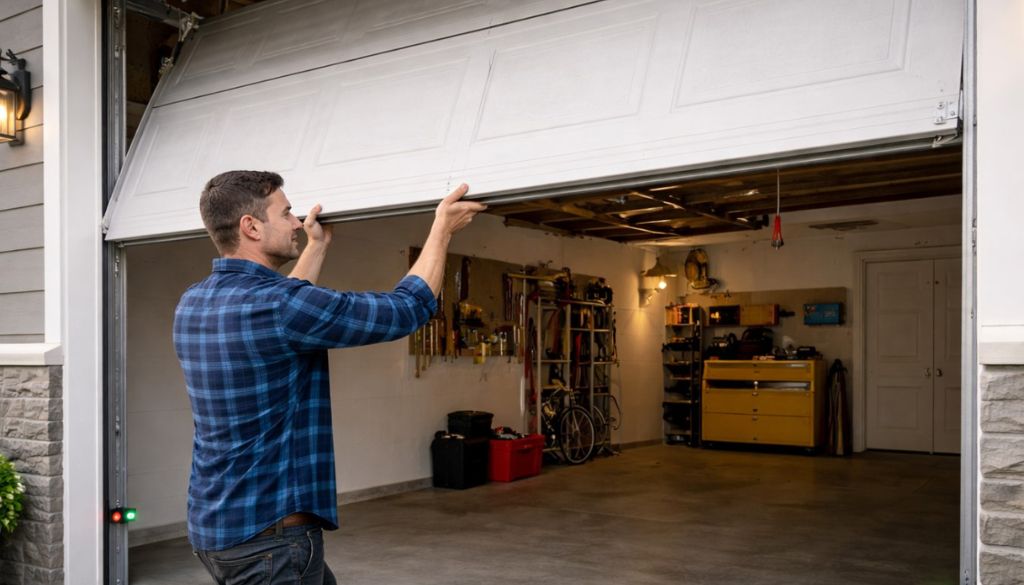
Once disconnected, a balanced door should move in a controlled way by hand. It should not feel like dead weight, and it should not shoot upward with force. When raised partway, it should generally stay near that position rather than dropping quickly or rising aggressively. If the door feels unusually heavy, crooked, sticky, or unpredictable, the inspection should stop there and a qualified garage door repair professional should evaluate the system.
The most important rule is to avoid adjusting garage door springs yourself. Torsion springs store substantial energy. So do other spring systems. The danger is not only in the spring itself, but also in the set screws, winding hardware, cables, drums, brackets, and the body position required to work around them. Professional garage door maintenance and repair practices exist for a reason. Work often happens overhead, near the ceiling, and in tight spaces where a slip, twist, or falling part can cause serious injury.
A homeowner can observe. A trained technician should adjust. That distinction keeps garage door safety in the foreground.
What a balanced door feels and sounds like
A properly balanced door does not need to be silent, but its movement should feel even. When you lift it manually, the resistance should be consistent rather than heavy at the bottom and loose at the top, or easy on one side and stiff on the other. The door should not rack in the opening, meaning one side should not lag behind the other. Panels should travel along the tracks without scraping, binding, or leaning.
Sound helps, but it can be deceptive. A rumbling door may simply have dry rollers or hinges that need appropriate garage door lubrication. A sharp snap, grinding scrape, or sudden bang points to something more serious. Repeating noises deserve attention because they often reveal where the system is stressed. A click at the same point in every cycle may relate to a roller, hinge, track section, or panel joint. A scraping sound near one jamb may suggest alignment trouble or damaged hardware.
Do not treat lubrication as a cure for every noise. Lubrication is part of garage door maintenance, but it cannot straighten tracks, restore broken components, or correct spring tension. Over-lubricating the wrong places can attract dirt and make inspection messier. The better approach is to look first, listen second, lubricate only where appropriate, and call for service if the movement itself looks wrong.
Springs, cables, rollers, and tracks: what visual inspection can safely catch
The safest homeowner inspection is visual. Stand back with the door closed and look at the full system. Then open the door and observe movement from a safe position. Avoid placing fingers near hinges, rollers, tracks, or cable areas while the door moves. Do not loosen brackets, remove covers, or try to reposition cables.
Garage door springs should look intact, with no obvious separation in the coil if they are visible torsion springs. If a torsion spring has a clear gap in the coil, the door may be inoperable or unsafe to lift. Garage door cables should appear seated and not frayed, slack, tangled, or hanging loose. If a cable looks damaged, stop using the door and schedule garage door repair. Cables are part of the lifting system, and cable problems can change quickly from annoying to hazardous.
Garage door rollers should stay in the tracks and rotate without obvious wobble. A roller that drags rather than rolls adds resistance. A roller that has come out of the track creates a more serious condition. Garage door tracks should be secured, visibly aligned, and free of obstructions. Small debris in a track can interfere with travel, but bent metal, loose fasteners, or a door that rubs hard against the track is not something to ignore.
Here is a compact visual checklist that works well during a seasonal garage door inspection:
- Look for gaps, breaks, or unusual stretching in visible garage door springs.
- Check whether garage door cables appear frayed, loose, crossed, or off their drums.
- Watch garage door rollers as the door moves, noting wobble, dragging, or rollers leaving the tracks.
- Inspect garage door tracks for obvious bends, loose attachment points, or debris in the path.
- Listen for sudden changes in sound, especially scraping, grinding, banging, or repeated clicking at the same point.
This is one of the few places where a list is better than prose because the order helps. Even so, the inspection is not a repair procedure. It is a way to decide whether normal use can continue, whether minor garage door maintenance may help, or whether the door needs professional attention.
Opener safety is not optional
Automatic residential garage door openers in the United States are subject to a mandatory federal safety standard. They must include entrapment protection, such as a photoelectric “electric eye” sensor or an equivalent safety system. The reason is direct and serious: a closing garage door can trap a person, child, pet, or object if it does not detect an obstruction and reverse.
A properly functioning garage door opener should reverse when closing onto an obstruction. Safety reversal systems should be tested monthly. If the door fails to reverse, the opener should be adjusted according to the owner’s manual or inspected by a professional. That monthly test is not busywork. Safety systems can be bumped, blocked, misaligned, damaged, or affected by wiring problems. A door that reversed correctly last year is not guaranteed to reverse correctly today.
Older non-reversing openers are a known hazard. If an opener does not have working entrapment protection, it should not be treated as merely outdated. It belongs in the category of unsafe equipment. Depending on the door and opener condition, the responsible path may be repair, professional adjustment, or garage door replacement and opener replacement planning. The key point is not the age by itself. The key point is whether the system reverses and whether the required safety protection is present and working.
How to inspect photoelectric garage door sensors
Photoelectric garage door sensors are usually installed near the lower part of the door opening, with one unit sending a beam and the other receiving it. Their job is to detect something in the path of a closing door. If the beam is interrupted, the opener should not continue closing normally.
A common problem is simple misalignment. A storage bin, broom, bicycle tire, or child’s toy can bump a sensor bracket just enough to break the beam. Dust, spider webs, or direct physical damage can also interfere. The first inspection step is visual. Confirm that both sensors are present, mounted across from each other, aimed correctly, and not blocked. If the opener has indicator lights on the sensors, the owner’s manual will explain what those lights mean.
Do not bypass sensors to make the door close. That defeats a safety feature that exists to prevent entrapment. It may seem tempting when you are late for work and the door refuses to close, but bypassing garage door sensors turns a fixable inconvenience into an unnecessary risk.
If the sensors appear aligned and clean but the opener still behaves unpredictably, the issue may involve wiring, the opener logic, force settings, limits, door balance, or mechanical resistance. That is why garage door troubleshooting should not stop at the sensor lenses. A safe opener depends on the whole system.
The monthly reversal test
Testing the reversal system is one of the most important habits in garage door maintenance. It should be done monthly, and it should be done deliberately. The owner’s manual for the specific opener should guide the exact procedure, especially because models and safety systems vary.
In plain terms, the test confirms that the opener reverses when it should. If the door does not reverse during the test, stop using the automatic function until the issue is corrected. The owner’s manual may provide adjustment steps. If the adjustment is unclear, ineffective, or involves conditions beyond basic settings, call a professional.
A practical monthly safety routine can be kept short:
- Confirm the photoelectric sensors or equivalent entrapment protection are present and unobstructed.
- Close the door using the opener and verify that it reverses when the safety system is triggered according to the owner’s manual.
- Watch the full open and close cycle for hesitation, binding, crooked travel, or unexpected reversal.
- Keep remote controls and wall controls out of children’s reach.
- Teach children that the garage door is not a toy and that they should stay clear of a moving door.
The last two points matter as much as the mechanical ones. Children are naturally curious about buttons, remotes, lights, and moving doors. Safety depends on equipment, but it also depends on behavior. Remote controls should not be left where children can play with them. Wall controls should not invite casual use by small hands. A simple household rule, never run under a moving garage door, is worth repeating until it becomes automatic.
When opener symptoms point back to door balance
Many service calls begin with the sentence, “The opener is acting up.” Sometimes that is exactly right. Other times the opener is reacting to a door problem. A door that closes partway and reverses may have a sensor issue, but it may also be encountering resistance. A door that opens a few inches and stops may have a broken spring, a cable problem, or a mechanical bind. A motor that strains loudly may be trying to move a door that should not be moved by the opener at all.
This is where garage door balance becomes central to opener safety. If the door is too heavy because a spring has failed, the opener may still lift it briefly or partially. That does not mean the system is safe. It means the opener is being asked to do work outside its intended role. Continuing to press the remote can worsen the problem and may damage the opener or door hardware.
The same principle applies after garage door installation. A new opener installed on an old, poorly balanced door is not a clean upgrade. The door must be evaluated as part of the project. Likewise, a new door paired with an existing opener should be checked for safe operation, proper reversal, sensor function, and smooth travel. Installation and repair work around garage doors often involves ceiling-height tasks, cramped areas, hand tools, and awkward postures. A careful, staged approach protects both the worker and the finished system.
The difference between adjustment and repair
The word “adjustment” sounds harmless, but on a garage door it can mean several different things. Adjusting opener travel limits or force settings according to an owner’s manual is not the same as adjusting torsion springs. Cleaning sensor lenses is not the same as repositioning track hardware. Tightening a loose accessory is not the same as loosening a bottom bracket connected to a cable system.
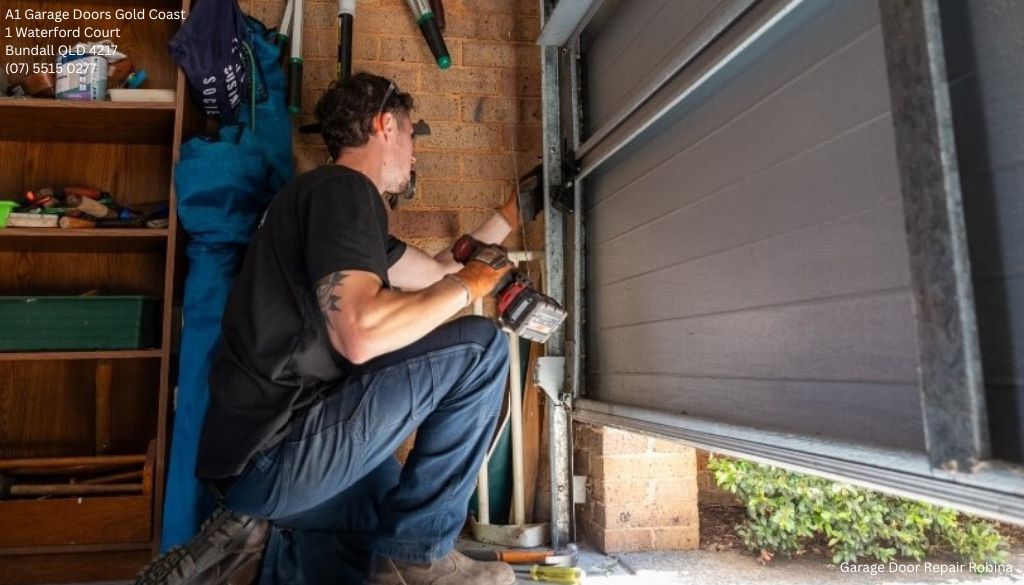
This distinction matters because some garage door repair tasks involve stored energy. Springs and cables are under tension. Brackets can carry load. Tracks support moving weight. Even a door panel can shift unexpectedly if the system is compromised. A professional technician approaches those parts with tools, sequencing, and habits that reduce risk. A homeowner with a socket wrench and a video may not see the hazard until the part moves.
There is also a diagnostic issue. If the opener fails a reversal test, the right correction depends on the cause. The owner’s manual may explain adjustment for the opener. But if the door is binding, the fix is not simply to increase force. If the sensors are missing, damaged, bypassed, or unreliable, the fix is not to keep holding the wall button until the door closes. If the door is out of balance, the opener setting is not the root problem.
Good garage door troubleshooting follows the evidence. It does not force the opener to overcome a mechanical defect.
Lubrication, cleanliness, and the limits of routine maintenance
Routine garage door lubrication can reduce friction and noise when used appropriately, but it belongs in the maintenance category, not the rescue category. A door that suddenly becomes heavy, crooked, or erratic should not be “fixed” with spray lubricant. It should be inspected.
The same goes for cleaning. Keeping the threshold area clear, removing obvious debris from the track path, and wiping dust from sensor lenses are reasonable maintenance habits. So is watching for items stored too close to the door travel path. Many garage door problems begin outside the hardware itself. A rake falls into the track line. A box shifts against a sensor. A bicycle handlebar blocks the beam. The opener responds exactly as it should, but the homeowner experiences it as a malfunction.
Cleanliness also helps inspection. It is easier to notice a frayed cable, shifted sensor, or bent track when the area is not cluttered. A garage does not need to look like a showroom, but the door path should be treated like a moving equipment zone. Nothing should lean against the tracks. Nothing should hang from the springs or opener rail. Children’s toys, sports gear, and storage bins should stay clear of the opening.
When replacement becomes the safer discussion
Garage door replacement is not always necessary when a problem appears. Many issues can be repaired by a qualified technician, and many safety concerns can be corrected through proper opener adjustment, sensor repair, or component replacement. Still, replacement becomes part of the conversation when the door, opener, or safety system no longer supports reliable operation.
An opener without proper working entrapment protection is not just an inconvenience. A door with repeated balance problems, damaged lifting components, or unreliable movement deserves a broader evaluation. A system that requires frequent workarounds, such as holding buttons, pushing panels, taping sensors, or manually helping the door along, is telling you something. The equipment is no longer earning trust.
There is a trade-off here. Repair may be appropriate when the door is structurally sound and the problem is isolated. Replacement may make more sense when multiple components are worn, when safety features are absent or unreliable, or when the cost of repeated service approaches the value of a modern, properly installed system. The best decision usually comes after a full garage door inspection, not after guessing from one symptom.
What professionals look for that homeowners often miss
A homeowner usually notices the obvious symptoms: the door will not close, the opener light flashes, the remote seems inconsistent, or the door makes a new sound. A professional looks at relationships. Does the door sit level? Do the cables share load evenly? Is the track position consistent with the door movement? Are the rollers contributing to drag? Does the opener reverse because the sensor beam is interrupted, or because the door meets resistance? Are the safety devices present, connected, and performing?
That broader view prevents piecemeal repairs. Replacing a noisy roller may help, but not if the track is bent. Adjusting opener limits may stop one symptom, but not if the door is out of balance. Real garage door maintenance is less about one magic adjustment and more about making sure the door, springs, cables, tracks, rollers, opener, and sensors work as one system.
There is also a worksite safety element. Installation and repair can require ladders, overhead fastening, electrical awareness, hand tools, and body positions that are not forgiving. The garage is often cramped with vehicles, storage shelves, bikes, and lawn equipment. A professional creates room to work, stages the task, and avoids standing where the door or hardware could move unexpectedly. That discipline is part of the job, not an extra.
A practical inspection rhythm for long-term safety
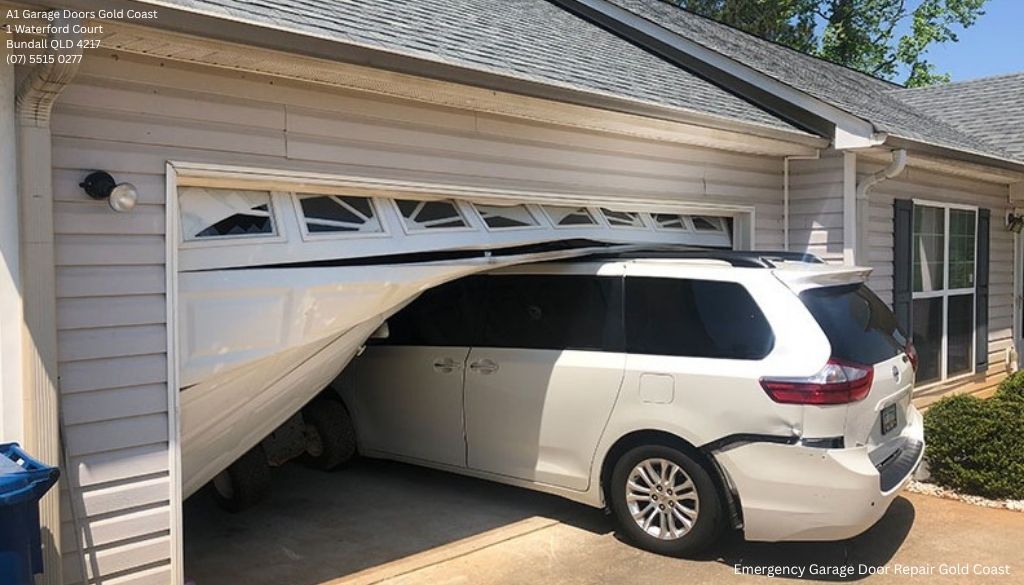
The best inspection routine is one you will actually follow. Monthly opener reversal testing should become a normal household task, like checking smoke alarms or replacing an HVAC filter. Seasonal visual inspections are usually a good rhythm for balance clues, hardware condition, roller movement, cable appearance, track cleanliness, and sensor position. After any impact, such as a vehicle bumping the door or a heavy object striking a track, inspect before continued use.
Pay attention after changes. A new sound after garage door lubrication may mean excess product reached a place it should not, or that the original noise was not friction. A new opener installed on an old door should prompt careful balance verification. A door that works well in manual mode but behaves poorly under power points the inspection toward opener settings, sensors, or controls. A door that feels wrong by hand points back to the mechanical system.
Most importantly, do not normalize unsafe behavior. If the door fails to reverse, treat that as a safety failure. If sensors are missing or bypassed, correct the condition. If the door is heavy or unstable when disconnected from the opener, stop and call for service. If children use the garage, reinforce the rules often: stay away from a moving door, do not race under it, do not play with remotes, and do not touch sensors or tracks.
A garage door does not need constant attention, but it does need the right attention. Balance protects the door and opener from strain. Entrapment protection helps protect people. Regular inspection catches changes while they are still manageable. When the system passes those checks, daily use feels ordinary again, which is exactly how a safe garage door should feel.